By Solomon OKPO
In politics, endorsements are rarely accidental. They are often the clearest indicators of confidence, performance, and strategic calculation by stakeholders who understand the realities of governance and representation.
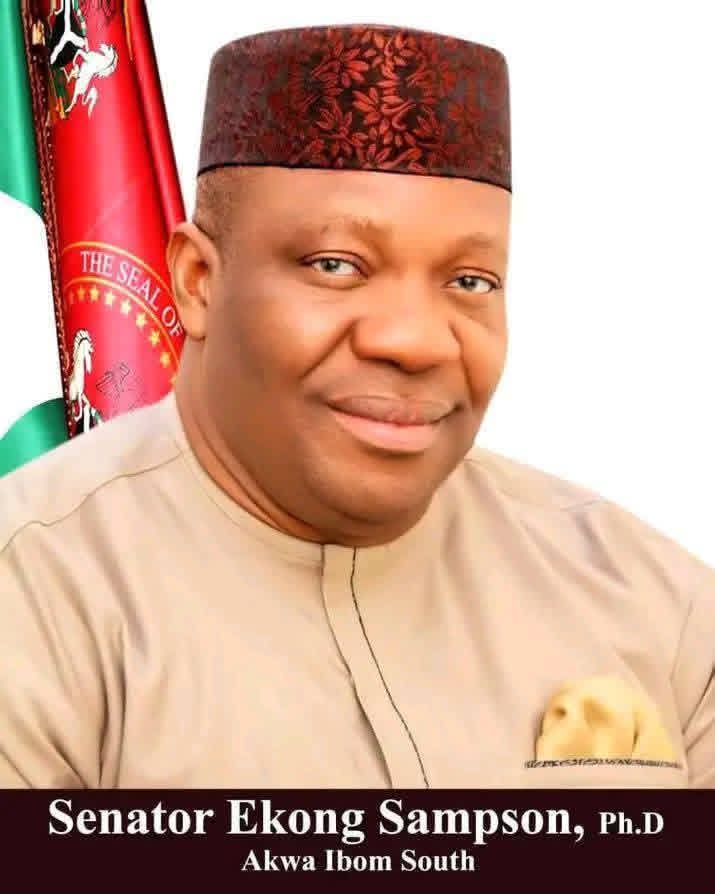
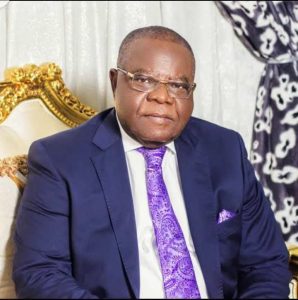
The growing chorus of support for Senator Ekong Sampson’s re-election in Akwa Ibom South is therefore not surprising. Rather, it reflects a deliberate political judgment by influential leaders and institutions across the senatorial district.
Across the political spectrum and generational divide, prominent figures and groups are lining up behind the senator. The Eket Senatorial District Elders Forum, led by elder statesman Rt. Hon. Chief Nduese Essien, has openly declared support. This is a body whose opinions carry enormous weight within the district’s political structure. When elders of such standing speak, they are usually signaling both experience and strategic foresight.
Beyond the elders, a number of respected political and policy institutions have also expressed their confidence in Sampson. Groups such as the Akwa Ibom South Democratic Coalition and the Akwa Ibom South Consultative Assembly represent a wide network of political actors and community leaders who shape grassroots opinion and mobilization.

Individual leaders with significant political pedigree have equally thrown their weight behind the senator. Elder (Engr.) Ben Udobia, a respected industrialist and political leader, stands among those advocating continuity. So too does Dr. Emmanuel Ekuwem, the immediate past Secretary to the State Government, whose voice within the political community carries credibility.
Former legislative leaders are also part of the coalition supporting Sampson. Rt. Hon. Peter Linus Umoh, a former Speaker of the Akwa Ibom State House of Assembly, as well as Rt. Hon. Owoidieghe Ekpoattai and Rt. Hon. Patrick Ifon, both former members of the House of Representatives, have joined the expanding list of backers. Their involvement reflects a strong consensus among experienced lawmakers who understand the value of legislative continuity.
One of the most strategic endorsements has come from the high-powered Public and Policy Analysis Committee of Akwa Ibom South, led by Prof. Etie Ben Akpan. The committee’s support suggests that beyond political loyalty, there is a policy-based appreciation of the senator’s contributions and capacity.
Grassroots political actors have not been left out. The Forum of Former Elected Councillors in Akwa Ibom South and the Forum of Former APC Chairmanship Candidates in the district have also endorsed the senator. Their backing indicates that support for Sampson extends beyond elite circles into the broader grassroots political structure.
Perhaps most striking is the endorsement by the National Association of Nigerian Students (NANS), Akwa Ibom Axis. Youth organizations rarely align themselves with political actors unless they see potential for opportunity, representation, and engagement. Their support signals that the senator’s appeal is not limited to traditional political stakeholders.
Taken together, these endorsements represent more than routine political gestures. They reveal a broad coalition spanning elders, policymakers, legislators, grassroots leaders, and the youth. In a senatorial district as politically sophisticated as Akwa Ibom South, such a coalition does not emerge by coincidence.
At the heart of this political momentum lies a strategic calculation: the importance of maintaining ranking status in the Senate. In Nigeria’s legislative system, seniority often translates into influence, committee leadership, policy leverage, and stronger advocacy for constituency interests. Stakeholders in Akwa Ibom South appear determined not to sacrifice that advantage.
For them, the logic is simple.
Continuity in representation can consolidate political influence and secure greater dividends for the district. With endorsements continuing to grow, Senator Ekong Sampson’s re-election bid is steadily shaping into a rallying point for leaders who believe that Akwa Ibom South’s voice in the Senate should not only be maintained but strengthened.
Whether this wave of support ultimately translates into electoral victory will depend on the voters. Yet the message from the district’s political establishment is already unmistakable: they are choosing experience, continuity, and sustained influence at the national level.