
By Solomon OKPO
In Nigeria’s political space, constituency projects are often reduced to token gestures, symbolic handouts timed for optics rather than impact.
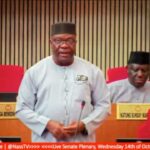
Against this familiar backdrop, the performance of Senator Ekong Sampson, representing Akwa Ibom South (Eket) Senatorial District, stands out not merely for its scale, but for its intentionality. His record compels a frank assessment: this is not transactional politics; it is structured representation with a clear development philosophy.
The donation of 20 exotic cars, buses, and tricycles to constituents has understandably dominated public discourse.
Critics, as expected, may dismiss such gestures as populist. That critique collapses, however, when placed alongside the senator’s broader governance footprint, over 40 quality projects, aggressive legislative engagement, and sustained investment in education, infrastructure, healthcare, and human capital. The vehicles are not the story; they are only the most visible symbols of a far more consequential agenda.

In less than three years, Senator Sampson has demonstrated what focused representation looks like when it is anchored on planning rather than patronage. Roads, electrification projects, healthcare facilities, ICT centres, erosion control, water schemes, and school infrastructure across the 12 local government areas of Akwa Ibom South point to a deliberate spread, not selective favoritism. This breadth matters. It signals an understanding that development must be inclusive to be sustainable.
Perhaps most defining is his fixation on education. In a political culture where lawmakers often treat education as a rhetorical accessory, Senator Sampson has made it a strategic priority. Scholarships, grants, including the ₦100 million education grant to students and teachers and infrastructure support for learning institutions underscore a belief that education is not charity, but policy.

His legislative focus reinforces this outlook: bills for a Federal University of Technology in Ikot Abasi, Federal Medical Centres, and the South-South Development Commission reflect a long-game approach to regional capacity building.
This education-first mindset is not accidental. Senator Sampson’s own intellectual journey, culminating in a PhD, informs his politics.
He understands, perhaps more than most, that societies do not escape poverty through cash transfers alone but through knowledge, skills, and institutional strength. In this sense, his empowerment programmes, ranging from business grants to vocational tools are complements, not substitutes, for systemic development.

On the legislative front, his performance resists the lazy stereotype of constituency-focused lawmakers who neglect national duty. Sponsorship and co-sponsorship of key bills, effective committee work as Chairman of the Senate Committee on Solid Minerals, and persistent advocacy on issues such as maritime economy, environmental protection, youth employment, and the reactivation of ALSCON in Ikot Abasi reveal a senator who understands the interplay between local needs and national policy.
The political endorsement by seasoned technocrats and former officeholders across party lines is therefore not surprising. Their call to prioritise experience and ranking ahead of 2027 is a pragmatic argument, not sentimentality. In a Senate where influence grows with tenure, replacing effectiveness with experimentation would be a costly gamble for Akwa Ibom South.

The hard truth is this: representation is not about noise, slogans, or episodic generosity. It is about consistency, competence, and outcomes. By those metrics, Senator Ekong Sampson has reset the benchmark. His record challenges both colleagues and constituents to rethink what they should demand from public officeholders.
If democracy is ultimately about improving lives, then the evidence from Akwa Ibom South suggests that Senator Ekong Sampson is not just playing politics, he is practicing governance. And in Nigeria today, that distinction makes all the difference.
The Evangelist News