
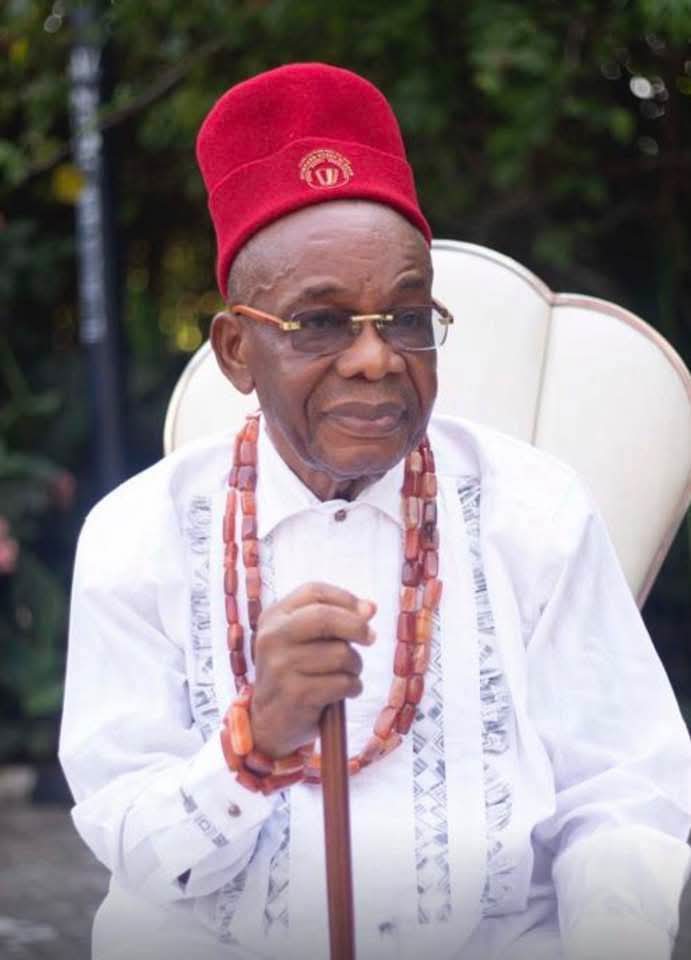
By Solomon OKPO
By any measure, Chief Nduese Essien has earned the moral authority to speak on Nigeria’s trajectory. At 82, his reflections are not the sentimental musings of an elder longing for nostalgia. They are the sober assessment of a statesman who has witnessed Nigeria’s promise, its turbulence, and its steady drift from institutional discipline.
When he says he has “seen better days,” it is not mere rhetoric. It is an indictment.
Nigeria once functioned with a greater sense of order, civic responsibility, and consequence. Institutions commanded respect. Laws, though imperfectly enforced, were not routinely disregarded. Leadership, while not immune to failings, carried a visible burden of accountability. That era was not utopia, but it was anchored in values that restrained impunity.
Today, impunity has become casual. Disobedience to laws is no longer shocking; it is expected. Political rivalry frequently descends into open hostility. Public service too often tilts toward self-preservation rather than national development.
Chief Essien’s lament strikes at the heart of this moral and institutional erosion.
His career lends weight to his concern. As a former member of the House of Representatives, Leader of the South–South Parliamentary Caucus, and Chairman of the House Committee on Anti-Corruption, National Ethics and Values,
Essien occupied roles that demanded integrity. His later appointment as Minister of Lands, Housing and Urban Development reinforced a reputation built on trust and competence. He was also part of the Technical Committee on the Niger Delta, engaging complex regional challenges long before they became national flashpoints.
Now, as a member of the PANDEF Peace and Reconciliation Committee tasked with resolving the Rivers State political standoff, he remains active in efforts to stabilize a fragile polity. That is significant. At 82, he is not retreating into ceremonial elderhood; he is still intervening where it matters.
His appeal for a “hope-filled Nigeria” must therefore be understood as both warning and blueprint.
Hope is not passive optimism. It requires structure. It demands the restoration of consequence for misconduct. It insists on rebuilding institutions so they are stronger than personalities. It calls for leadership that values long-term stability over short-term advantage. Without these, “hope” becomes a slogan detached from reality.
The deeper message in Essien’s remarks is that Nigeria’s decline is not inevitable. It is the product of choices—political, civic, and institutional. That means it can be reversed by better choices.
Re-enacting the “glorious days” he references does not mean romanticizing the past.
It means reclaiming discipline, reviving ethical governance, and reestablishing respect for the rule of law. It means confronting corruption not as a talking point but as a structural threat. It means ensuring that political disagreements, such as the Rivers crisis, are resolved through dialogue rather than destabilization.
Nigeria’s population is young. Its potential remains vast. But demographic strength without institutional order is combustible. If the country continues to normalize impunity, the costs will compound across generations.
Chief Nduese Essien’s 82nd birthday message should not be reduced to ceremonial goodwill. It is a call to reset national standards. The question is whether today’s leaders—across federal, state, and local levels—are prepared to rise to that challenge.
Time is not unlimited. Even those who have “seen better days” will not be here forever to remind the nation what was once possible. The responsibility now rests with those in power to prove that Nigeria’s best chapters are ahead, not permanently behind.