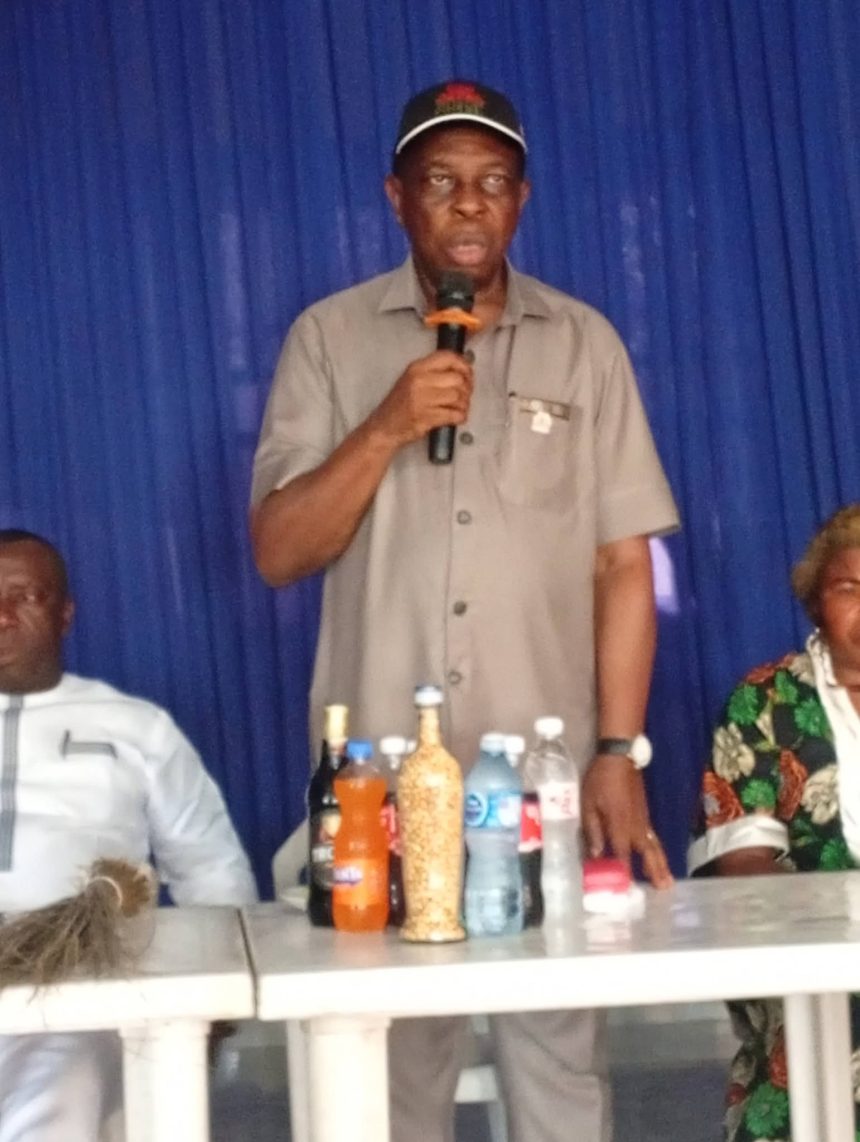
The recent mobilisation led by the APC Urban 2 Ward leader and the Commissioner for Sports, Elder Paul ‘Sports’ Bassey, other party’s stakeholders in Eket Local Government Area was not a routine exercise in party optics. It was a deliberate political signal, one that shifts the 2027 discourse from lofty promises to measurable performance, grassroots relevance, and inclusive governance.
Politics, in its most practical form, is transactional. Voters reward outcomes, not intentions. What unfolded at the Idua Civic Centre, Eket local government Area went beyond crowd enthusiasm for party e-registration; it was a public endorsement rooted in perceived dividends of governance.

The expressed support for Governor Pastor Umo Eno, President Bola Ahmed Tinubu, and Senate President Godswill Akpabio suggests a recalibration within the APC: political loyalty is increasingly tied to visible impact rather than abstract messaging.
Governor Umo Eno’s appeal, as echoed by speakers at the event, rests on a narrative of equitable development and deliberate grassroots engagement. In a polity where perceptions of exclusion often dampen civic participation, the emphasis on Eket’s representation and spread of projects is politically consequential.

It redefines governance as inclusive and accessible, not distant or elitist. From healthcare and education to sports development and road infrastructure, the underlying message was unambiguous, governance must be seen to be felt.
Yet, the mobilisation also laid bare a strategic truth the APC must confront. Endorsements, no matter how loud, do not win elections; structures do. The strong focus on membership e-registration and INEC’s Continuous Voter Registration was a calculated move.
Political goodwill without a verified voter base is ineffective. Urban 2’s insistence on grassroots mobilisation reflects a sober understanding that “electoral victories are secured at polling units, not on podiums”,
Beyond the local context, the event carried a national undertone. By simultaneously affirming support for state and federal leadership, the ward projected internal cohesion across power centres, an advantage in a political landscape often undermined by factionalism. If translated into sustained action, such unity could become a defining strength for the APC in Akwa Ibom State.

However, this confidence is conditional. Public support today does not translate into automatic loyalty tomorrow. Performance must be sustained, transparency deepened, and citizen engagement institutionalised beyond election cycles. The electorate is increasingly discerning and less tolerant of complacency. What Urban 2 offered was not a blank cheque, but an opportunity.
Ultimately, the Urban 2 APC mobilisation reads less like a campaign rally and more like a political performance review. It affirms confidence in current leadership while simultaneously raising expectations.
As 2027 approaches, voters will not be guided by promises remembered but by evidence examined, projects completed, lives improved, and systems strengthened. Failure to meet that standard will convert today’s applause into electoral indifference.
SPONSORED