By Solomon OKPO
The renewed agitation for the creation of Obolo State has stirred deep-seated concerns among stakeholders in Akwa Ibom and the wider South-South region, particularly regarding the historical integrity and cultural identity of the communities being drawn into the debate.
In a detailed reflection authored by Elder Etukudo Etukudo Essien, a respected community leader, the Obolo State proposal is critiqued not just for its political undertones, but for its apparent manipulation of history and cultural affiliations. The statement underscores that the office of a Senator, particularly in such times of critical national restructuring, is not a ceremonial platform but a moral and constitutional bulwark for the protection of heritage and territorial integrity.
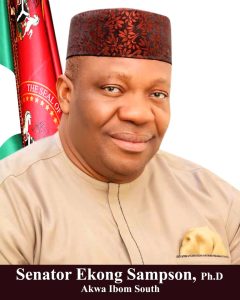
At the center of this discourse is Senator Ekong Sampson, who has been commended for his clear-sighted representation of his constituents, especially as the conversation surrounding state creation intensifies.
One of the most controversial elements of the Obolo State proposal is the attempt to amalgamate various ethnic groups, some of whom have had no historical or cultural ties to the Obolo people, into a singular political entity. The narrative highlights that groups such as the Oro, widely known as a sub-tribe of the Ibibio nation, are being forcefully realigned to the Obolo for political gain.
Evidence of shared Ibibio heritage, such as common names (e.g., Isemin, Okpo, Etim), shared clan affiliations (Idua, Afaha, Nsit), unified cultural practices (Ekpe, Ekpo, Mbopo, Ibom), and linguistic bonds, firmly situates the Oro and other groups like the Ekid and Eket within the Ibibio sociocultural framework.
This reengineering of identity, Elder Essien warns, undermines centuries of established tradition and risks igniting conflicts over land, sea access, and political representation.
The mischaracterization of spiritual practices is another critical fault line in the ongoing debate. The publication refutes claims tying the deity Anantigha to Obolo religious traditions. According to Elder Essien, the supreme deity of the Obolo people is Yok-Obolo, with deep roots in marine worship, as opposed to Anantigha, a name more commonly associated with the Efik of Calabar.
Such cultural errors, though seemingly minor, signal a broader agenda of historical erasure and forced unity, the consequences of which could be severe if unchallenged.
The demand for Obolo State, if actualized under present false alignments, could disrupt established boundaries and reopen settled historical disputes. The document warns that communities such as Ikot Abasi, Mkpat Enin, ONNA, Eket, and Esit Eket risk being dispossessed of their coastal territories and natural resources under the guise of inclusion.
The 1916 Privy Council ruling, which established Stubbs Creek as part of Eket and Esit Eket, remains a legal anchor, and any political move that contravenes it could provoke legal and communal backlash.
Moreover, forced mergers could weaken the cultural autonomy of Ibibio and Oro communities, placing their heritage under a political umbrella that neither reflects their origins nor respects their spiritual lineage.
The statement calls on Senator Ekong Sampson and other representatives to approach this issue with extreme caution. As committee reports and recommendations move forward, any ambiguous language or subtle compromises must be vigilantly weeded out to avoid jeopardizing the rights of their constituents.
“The destiny of constituents lies in your hands,” the piece asserts, stressing that history will remember those who stand for truth and heritage over politics.
Elder Etukudo’s commentary serves as both a warning and a call to action: state creation must be driven by genuine identity, not fabricated alliances or political maneuvering. As the nation contemplates restructuring, the preservation of cultural truth must guide every decision.
With tensions rising and political interests mounting, the responsibility now lies squarely on the shoulders of lawmakers, traditional rulers, and community leaders to ensure that historical facts are not sacrificed for fleeting political convenience.
The people are watching, and history will judge.