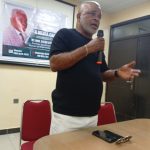
Every August 19 carries a double meaning for Mkpisong Frank Archibong. It is his birthday and, significantly, World Humanitarian Day. Coincidence? Perhaps. But in a country where symbolism often masks substance, this alignment tells a deeper story: one of a public servant whose actions mirror the very ideals the world pauses to celebrate.
In an era where many in public office are content with rhetoric, Archibong has chosen the harder path, impact. As Akwa Ibom State Commissioner for Local Government and Chieftaincy Affairs and Dean of the College of Commissioners and Special Advisers, he operates within the system.
Yet, through the Archibong Udoh Foundation, established in 2021, he works far beyond it, reaching directly into the lives of ordinary people.
This is not charity for headlines; it is intervention where it matters most.
Consider the foundation’s medical outreach programmes. What began modestly has evolved into a structured humanitarian response addressing critical healthcare gaps. The second edition of its free medical and surgical outreach at Immanuel Hospital, Eket, scheduled for August 2025, is not just another event, it is a lifeline.
From patient counselling to surgeries, dental care to optometry, the initiative tackles healthcare access in a way many government systems struggle to achieve.
Aligned with Governor Umo Eno’s ARISE Agenda, the programme underscores what governance should look like when public policy meets personal conviction. It is one thing to design frameworks; it is another to deliver healing.

The testimonies speak louder than any press release. A beneficiary from Ikot Ubo in Nsit Ubium, once burdened by a medical condition, walked away restored after a successful surgery. That is not statistics, that is transformation.
But Archibong’s humanitarian footprint does not end in hospital wards
Across villages like Ikot Ibiok and Eseyeridua, his interventions have become part of the social fabric. Food palliatives, especially during festive seasons, have turned despair into dignity. For many families, celebrations that would have been impossible are made possible through his consistent support.
Housing projects for the underprivileged further demonstrate a clear understanding of what development means at the grassroots: shelter, security, and stability.
Then comes education, arguably his most strategic investment.
At a time when access to education is increasingly tied to economic privilege, Archibong has deliberately broken that barrier. By providing over 500 free JAMB forms annually, alongside tutorials, he is not just supporting students, he is engineering opportunity. Scholarships and grants for indigent students, both locally and internationally, extend that impact even further.
And here lies an unexpected but critical outcome: security.
Nigeria has witnessed alarming incidents linked to examination travel. Reports of kidnappings, from Akwa Ibom’s waterways to parts of Benue, have exposed the vulnerability of young candidates.
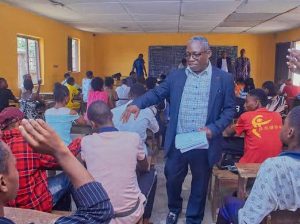
By decentralizing access through support systems like free forms and localized preparation, initiatives like Archibong’s inadvertently reduce exposure to such risks.
This is where humanitarian work transcends charity and becomes policy-relevant intervention.
Yet, the larger question remains: why is this model not widespread?
Too many leaders still operate within the narrow confines of office, disconnected from the daily struggles of the people they serve.
Archibong’s approach challenges that norm. It is hands-on, people-driven, and unapologetically practical.
This column will say it plainly: leadership must move beyond ceremonial governance.
If more public officials replicated even a fraction of this commitment, the narrative of insecurity, poverty, and neglect would begin to change.
Communities would become more resilient. Newspapers would carry fewer stories of despair.
Frank Archibong may not claim perfection. But in a system often criticised for indifference, he has demonstrated something rare, intentional compassion backed by measurable action.
And that is the essence of World Humanitarian Day: not speeches, not slogans, but service.
As some of you leaders read my narratives, take note that as your own birthday approaches, the celebration should not just be about marking a birthday, It should be about recognising a model, one that proves leadership, when done right, is not about power.
It is about people!