

By Solomon OKPO
In Nigeria’s political evolution, one truth has gradually become unavoidable: legislative effectiveness today is no longer driven by enthusiasm alone but by experience, strategic positioning, and institutional mastery. When elder statesman Nduese Essien declared that the Senate is no longer a place for “freshmen and homeboys,” he was not merely making a partisan statement—he was describing a structural reality within the modern National Assembly of Nigeria.
Over the past 27 years of democratic governance, the Nigerian Senate has transformed into a highly complex political institution. Influence within the chamber is largely determined by networks, seniority, legislative experience, and the ability to navigate power blocs that shape national decision-making. In such an environment, sending inexperienced representatives to learn the ropes is increasingly a costly gamble for any constituency.
Essien’s argument is blunt but difficult to dismiss: political naivety no longer has room in the upper chamber.
The era when the National Assembly of Nigeria served as a classroom for legislative apprentices is over. Today, it is an arena dominated by seasoned actors, individuals who either spent years in the Senate building influence or who transitioned from the House of Representatives with significant parliamentary experience.
Examples abound. Figures such as Ahmed Lawan and Abdul Ningi illustrate how institutional longevity can translate into legislative power and national visibility. These individuals are not merely lawmakers; they are power brokers who understand the intricate machinery of governance.
For regions like Eket Senatorial District, Essien’s warning carries strategic implications. Political representation at the national level is no longer simply about occupying a seat; it is about commanding influence. A senator who arrives in Abuja without prior legislative exposure risks becoming what Essien described as someone who “gets lost in the crowd.”
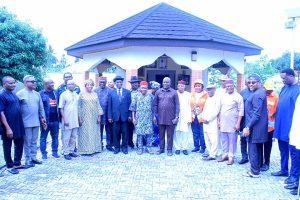
This is the context in which the elders of the district are evaluating the record of Ekong Sampson. His political trajectory, from legislative aide to local government chairman, state legislator, commissioner, and eventually senator, reflects a steady accumulation of governance experience. In parliamentary politics, such a progression matters because it equips a lawmaker with both procedural knowledge and political networks.
Essien’s perspective also highlights an uncomfortable but undeniable dimension of Nigerian politics: the expectations placed on legislators have expanded far beyond lawmaking. Constituents increasingly judge their representatives not only by bills sponsored or oversight conducted but also by the ability to attract projects, jobs, and social support. While such expectations may blur constitutional boundaries, they have nonetheless become part of the political reality senators must navigate.
For Eket Senatorial District, the larger question is whether political continuity offers greater benefits than constant experimentation. The district previously experienced the advantages of sustained representation during the tenure of Udoma Udo Udoma, whose extended stay in the Senate enabled him to consolidate influence and deliver measurable outcomes.
Essien’s position therefore reflects a strategic calculation rather than mere political loyalty: stability and experience may offer the district a stronger voice in national affairs than the uncertainty of starting over with a political newcomer.
The broader lesson extends beyond Eket. Across Nigeria, constituencies must increasingly recognize that representation in Abuja is a competitive enterprise. Legislative influence is cumulative, not instantaneous. Sending experienced hands to the Senate may no longer be a luxury, it may be the only realistic path to relevance in national decision-making.
In the end, Essien’s message is less about personalities and more about political maturity. If the Senate is indeed an arena of “principalities and powers,” then constituencies that wish to be heard must send representatives who already understand the game.