
By Staff Reporter
The Member representing Eket State Constituency in the Akwa Ibom State House of Assembly, Hon. Nsidibe Inyang Akata, has responded to growing public scrutiny over his performance, outlining a range of constituency projects and legislative efforts while reaffirming his commitment to people-oriented representation.
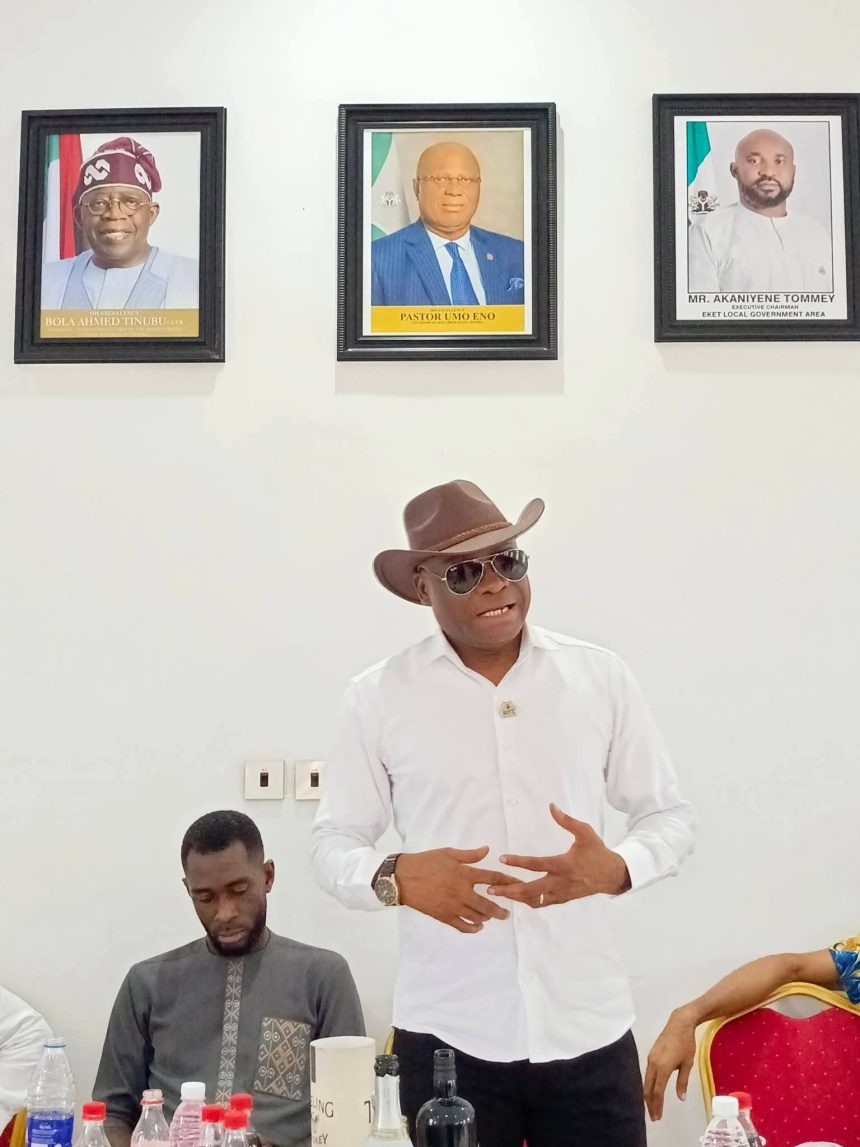
Speaking during an interactive session with journalists on Monday at the Eket Chairman’s Lodge, Akata maintained that his stewardship has been defined by tangible interventions across key sectors, even as concerns persist among some constituents regarding the scope and visibility of his impact.
The lawmaker highlighted several projects executed within the constituency, including the construction of a three-classroom block and provision of a water facility in Iko Ekid, as well as a 400-capacity civic centre in Okon-Eket, upgraded from its initial 180-capacity design and complemented with a solar-powered borehole.
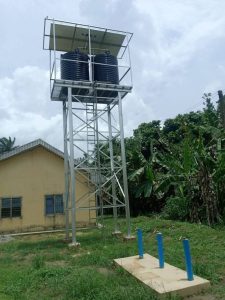
He further listed the installation of a solar-powered borehole at a health centre in Iko Ekid, alongside social welfare initiatives such as the payment of health insurance premiums for over 100 elderly residents and the disbursement of ₦50,000 monthly stipends to selected beneficiaries across the constituency’s three geopolitical zones.
On economic empowerment, Akata disclosed that women across various communities had benefited from business grants, with selected beneficiaries receiving between ₦100,000 and ₦200,000. He added that ₦6 million has been earmarked for student grants to support education within the constituency.
In the area of legislative engagement, the lawmaker pointed to motions he has sponsored, including advocacy for the reactivation of the Qua River Hotel and the integration of Traditional Birth Attendants into public health awareness campaigns aimed at reducing child mortality.
He also referenced his support for the proposed conversion of the College of Education, Afaha Nsit into a University of Education, describing it as a key legislative priority.
Despite these claims, sections of the constituency continue to raise questions regarding the overall impact of his representation, particularly in relation to infrastructure development, youth empowerment, and constituency-based legislative advocacy.
Concerns have also been expressed over the reappearance of certain constituency projects in successive budget cycles, as well as perceived silence on sensitive issues such as the Akoiyak matter and broader territorial concerns affecting the state.

Observers note that while constituency outreach and empowerment programmes remain visible, expectations are rising for more assertive representation on critical policy matters within the Assembly.
Responding indirectly to such concerns, Akata emphasized that effective leadership requires sustained engagement and strategic intervention, assuring constituents that ongoing and future initiatives would further justify the mandate entrusted to him.
As public expectations intensify, political analysts say the coming months may prove decisive in shaping perceptions of the lawmaker’s performance, particularly as constituents increasingly demand measurable outcomes alongside legislative visibility.
The Evangelist News