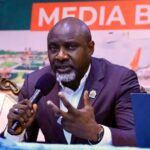
A public affairs commentator, Solomon Okpo, has defended the development approach of Umo Eno, stating that recent criticisms questioning the effectiveness of governance in Akwa Ibom State are built more on assumptions than verifiable evidence.
In a position paper titled, “Governance Beyond Rhetoric: Setting the Record Straight on Akwa Ibom’s Development Path,” Okpo argued that democratic discourse must be grounded in measurable outcomes rather than speculative assertions. He maintained that the suggestion that no governor can perform effectively under the state’s current governance structure ignores constitutional realities and ongoing interventions across key sectors.
State Intervention in Primary Healthcare:
Okpo pointed to the administration’s direct intervention in primary healthcare facilities across the state as evidence of proactive governance. According to him, several primary health centres that were previously non-functional have undergone renovation, re-equipment, and operational reactivation.
He described the move not as overreach but as a strategic response to systemic weaknesses at the local government level. “Public health outcomes improve through decisive intervention, not bureaucratic distancing,” he stated, noting that waiting for local governments to independently resolve structural challenges could amount to administrative negligence.
Model hospital
Education and Grassroots Infrastructure:
The commentary also highlighted ongoing renovations of classrooms, upgrades of public schools, and improvements in learning environments across various localities.
Okpo, a veteran journalist stressed that sustainable development begins with foundational institutions such as schools and healthcare facilities. He argued that focusing exclusively on large-scale capital projects without strengthening grassroots systems would undermine long-term economic stability.
“Mega-projects and investment summits have limited impact if the grassroots ecosystem remains fragile,” he noted.
Role of Commissioners and Executive Coordination:
Responding to claims by “Roberta Edu”, that commissioners merely accompany the governor without independent authority, Okpo described such assertions as unfounded. He explained that executive governance operates through coordinated policy implementation, oversight meetings, and institutional frameworks.
Model classroom with computers
He added that close monitoring by the executive arm reduces financial leakages and accelerates project delivery, emphasizing that budget approvals and procurement processes remain institutionally structured.
Local Government Autonomy Debate:
On the issue of local government autonomy, Okpo observed that fiscal federalism debates remain ongoing nationwide. He said collaboration between state and local governments should not be interpreted as structural failure but rather as adaptive governance.
According to him, state intervention in housing, education, or healthcare projects at the local level is often designed to ensure uniform service standards across communities.
Comparative Governance and the Lagos Example:
Addressing comparisons with Babajide Sanwo-Olu of Lagos State, Okpo argued that governance models must be contextualized. He noted that Lagos benefits from a unique economic base and strong internally generated revenue profile built over decades.
He maintained that while peer learning is important, wholesale replication without considering fiscal and demographic realities would be imprudent.
Model primary school
Capital Projects and Economic Strategy:
Okpo further asserted that the administration has not neglected capital-intensive initiatives, citing ongoing infrastructure renewal, SME support mechanisms, and agricultural expansion efforts alongside grassroots rehabilitation.
He described development as a multi-track process requiring both macroeconomic investments and micro-level stabilization.
Call for Data-Driven Assessment
In conclusion, Okpo called for governance assessment based on budget performance reports, capital expenditure ratios, healthcare coverage statistics, and school enrollment improvements rather than rhetoric.
He emphasized that structural reform requires coordinated intervention and institutional strengthening over time, urging stakeholders to adopt evidence-based analysis in evaluating Akwa Ibom’s development trajectory.