
By Our Correspondent
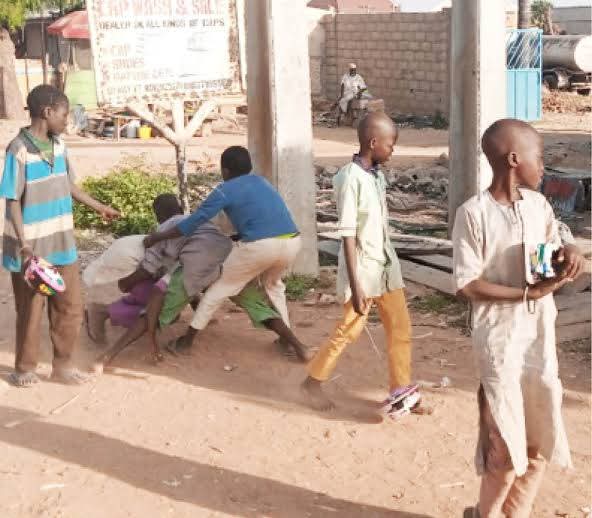
Despite Nigeria’s ratification of international conventions and the enactment of the Child Rights Act, child labour continues to thrive across the country, especially in Lagos State, where economic hardship and lax enforcement have created a breeding ground for exploitation.
From busy markets to dangerous construction sites, children as young as eight are forced into adult responsibilities, driven by poverty and family dependence. Investigations by PUNCH Healthwise reveal that many of these children serve as the primary breadwinners for their families, their futures compromised for daily survival.
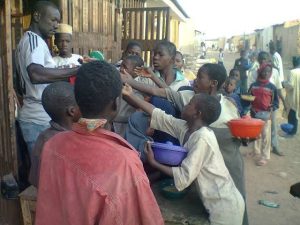
According to recent data from the National Bureau of Statistics (NBS), approximately 50.5% of Nigerian children aged 5 to 17 are engaged in economic activities, with 39.2% involved in child labour and 22.9% in hazardous work. The South-East zone has the highest percentage, while the North-West records the largest number of children affected.
In a tragic incident highlighting the dangers of this reality, a 17-year-old boy was electrocuted while working at a construction site in Alagbado, Lagos. The teenager, assisting his stepfather—a welder—stepped on a live wire and died instantly. Police investigations are ongoing.

This incident is just one of many. Across communities in Ojodu Berger, Ogba, Mushin, and Ikeja, children can be seen hauling loads, hawking, or handling machinery. Fifteen-year-old Ibrahim, a meat vendor at Ogba market, works daily to help his father pay school fees. “We are five children. I’m the firstborn, and I must support my family,” he said.
In Mushin, 10-year-old Tunde apprentices with a mechanic not out of choice, but survival. “I like learning, but sometimes I get tired. I wish I could go to school like my friends,” he said.
Twelve-year-old Aisha, who hawks goods in Oshodi, expressed similar pain: “My father left us, and my mother is sick. I have to work.”

Some employers exploit these children under the pretense of training, often paying them far below minimum wage. Bricklayers admit to hiring teens because they are “cheaper and don’t complain.”
Child rights advocate Johnson Adegbite condemned the trend, noting its long-term harm: “These children are robbed of education, exposed to injury, and trapped in a cycle of poverty. Weak enforcement allows this to persist.”
In response, Lagos State Commissioner for Youth and Social Development, Mobolaji Ogunlende, acknowledged the problem and vowed tougher enforcement. “It is against the law to hire anyone under 18. We are increasing advocacy and will not hesitate to prosecute offenders.”
While the Lagos government promises action, families remain caught between survival and legality. Until economic hardship is addressed and enforcement strengthened, Nigeria’s most vulnerable will continue to shoulder burdens far beyond their years. Source, (PUNCH Healthwise).