By Solomon OKPO | Crime Desk
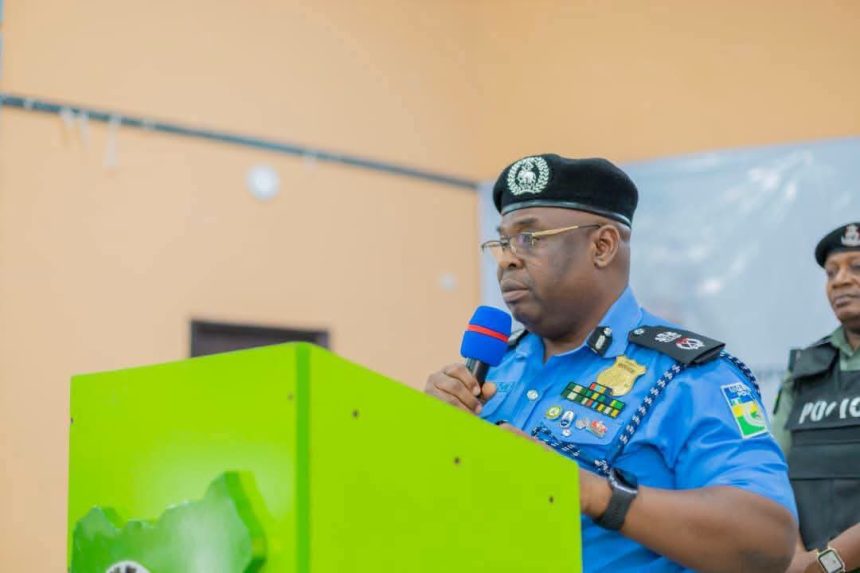
The Commissioner of Police, Akwa Ibom State Command, CP Baba Mohammed Azare, has called for stronger collaboration among the Police, Judiciary and media to promote accurate, responsible and effective crime and court reporting.
Azare made the call on Wednesday, August 26, 2026, while presenting a paper titled
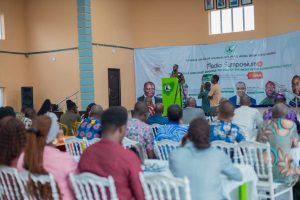
“The Role of the Media in the Administration of Justice: Towards Effective Crime and Court Reporting” at a symposium organised by the Nigeria Union of Journalists (NUJ), Akwa Ibom State Council, in collaboration with the Akwa Ibom State Judiciary, at the Patience (Kemi) Umo Eno Auditorium, NUJ Press Centre, Uyo.
The Police Commissioner described the media as a strategic link between justice institutions and the public, stressing that journalists have a major responsibility to report crime and judicial proceedings with accuracy, fairness and professionalism.
He said the media’s role goes beyond breaking news to protecting the integrity of investigations, safeguarding vulnerable persons and ensuring that citizens are properly informed about the justice system.
According to him, journalists must always respect the presumption of innocence, noting that an arrested or accused person should not be described as a criminal until a competent court has established guilt. He warned against “trial by media”, emphasising that it is the court, and not the Police, social media or conventional media, that determines whether an accused person is guilty.
Azare also urged journalists to verify information before publication, particularly in an era where social media has accelerated the spread of misinformation and disinformation.
He advised crime reporters to establish the authenticity, source, location and timing of information and, where necessary, seek confirmation from authorised security agencies before publishing sensitive reports.
He noted that certain details of ongoing Police investigations may not be immediately disclosed because premature publication could compromise evidence, expose witnesses, alert suspects, frustrate arrests or endanger victims and investigating officers. He therefore called for stronger professional relationships between journalists and authorised Police spokespersons.
The Commissioner further stressed the need for journalists to protect victims and vulnerable persons, particularly children, victims of sexual offences and trafficking victims. He cautioned that irresponsible disclosure of names, photographs, addresses or other identifying details could expose victims to further trauma, adding that journalists must distinguish between information the public is merely interested in and information that is genuinely in the public interest.
On court reporting, Azare advised journalists to clearly distinguish between allegations, evidence presented in court, arguments by counsel and actual judicial findings. He explained that statements made by lawyers are not necessarily findings of the court, while allegations contained in a charge do not amount to convictions.
He advocated regular training and professional engagements involving the Police, Judiciary, Nigerian Bar Association and NUJ to improve journalists’ understanding of criminal procedure, evidence and judicial processes. He also recommended that media organisations develop specialised crime and court reporters capable of handling the complexities of justice reporting.
Azare further appealed to Police officers to maintain professional relationships with journalists performing their lawful duties, while urging officers to adhere strictly to established communication protocols and avoid disclosing sensitive operational information or confidential intelligence.
He said the Police, Judiciary and media have different but interconnected responsibilities, stressing: “The Police investigates. The Judiciary adjudicates. The Media informs.” He maintained that when each institution performs its role professionally, justice and democracy are strengthened.
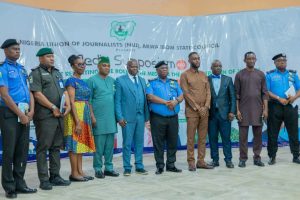
The Commissioner commended the NUJ Akwa Ibom State Council and the Akwa Ibom State Judiciary for organising the symposium, and assured journalists that the Police Command would continue to maintain an open and constructive relationship with the media while remaining committed to lawful policing, protection of lives and property, respect for human rights and the rule of law.
The Evangelist News