By Solomon OKPO
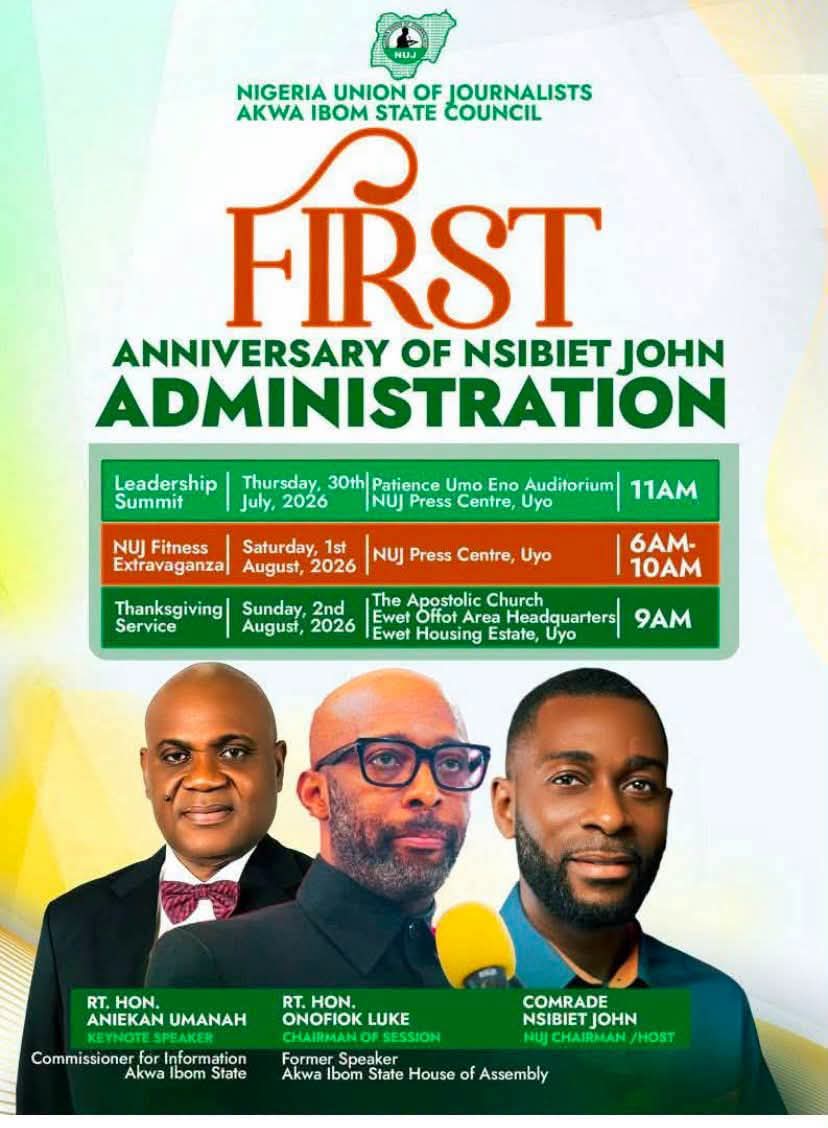
The first anniversary of the Comrade Nsibiet John-led administration of the Nigeria Union of Journalists (NUJ), Akwa Ibom State Council, should be viewed not merely as a celebration of one year in office but as an opportunity for introspection, renewal and purposeful action. The Leadership Summit organised to mark the occasion was timely and relevant, especially as the media industry continues to confront unprecedented economic, technological and ethical challenges.
The choice of the theme, “Journalism and Leadership: Balancing Editorial Independence with Government Policies,” could not have been more appropriate.
It captures one of the greatest dilemmas facing modern journalism. While government remains a major stakeholder and partner in national development, the media must never surrender its constitutional duty as society’s watchdog. Editorial independence is the lifeblood of credible journalism. Once compromised, public confidence in the press is diminished, and democracy itself is weakened.
The keynote presentation by the Commissioner for Information, Rt. Hon. Aniekan Umanah, rightly emphasized that the government and the media are partners in development, not adversaries.
However, partnership must never translate into subservience. Journalists best serve government when they tell the truth objectively, expose wrongdoing without fear or favour, and celebrate genuine achievements with equal professionalism. Constructive criticism is not hostility; it is an essential ingredient of good governance.
Equally commendable were the interventions of former Speaker Rt. Hon. Onofiok Luke, NLC Chairman Comrade Sunny James and veteran journalist Comrade Comfort Umanah.
Their unanimous emphasis on continuous learning, ethical leadership, digital competence and investigative journalism reflects the direction the profession must embrace. In an era driven by artificial intelligence, social media and instant communication, journalists who fail to upgrade their knowledge risk becoming irrelevant.
Yet, beyond seminars and speeches lies the more pressing issue of journalists’ welfare.
Welfare remains the greatest test of any union leadership. Better remuneration, housing opportunities, health insurance, cooperative financing, retirement planning and continuous professional development must move from promises to practical realities. A journalist burdened by poor welfare is vulnerable to undue influence and ethical compromise.
The NUJ leadership must therefore seize this momentum to institutionalise regular leadership training, strengthen mentorship for young journalists and champion policies that guarantee the dignity of media practitioners. The call for a comprehensive journalist’ s cooperative deserves immediate attention, as it can provide long-term financial security for members beyond active service.
One year is too short to judge an administration conclusively, but it is long enough to establish direction. The Nsibiet John administration has demonstrated its commitment to capacity building through this summit. The next challenge is translating the ideas generated into measurable achievements that members can see and experience.
As journalists, our greatest strength lies not in proximity to power but in our commitment to truth, fairness and public interest. The NUJ must continue to defend press freedom while promoting professionalism, unity and accountability within its ranks.
Leadership should not be measured by the number of anniversaries celebrated but by the lasting impact made on the lives of members and on the profession itself.
The success of this summit will ultimately not be judged by the quality of speeches delivered, but by the quality of leadership and journalism it inspires in the years ahead.
— Solomon OKPO, Publisher/Editor-in-Chief, The Evangelist Newspaper writes from Uyo, Akwa Ibom State.