
By Solomon OKPO | The Evangelist News Desk
ABUJA, Words may be silenced, but ideas cannot be executed. Pens may be broken, but the thoughts they produce can outlive generations. And writers may depart this world, but their words remain immortal witnesses to the triumphs and tragedies of humanity.
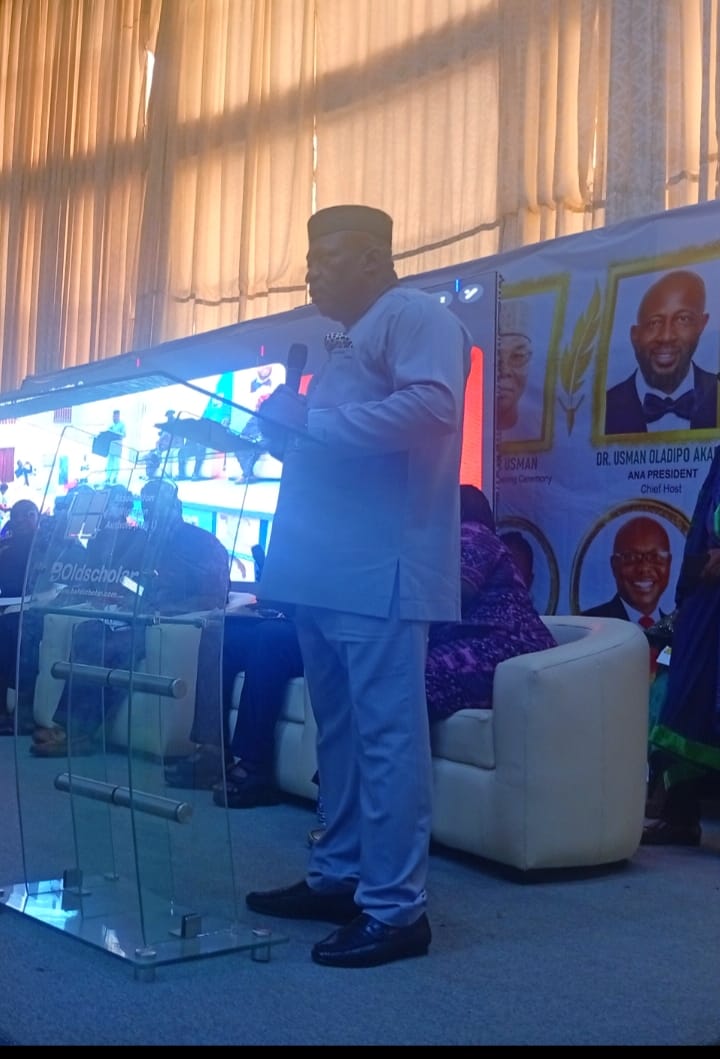
That was the profound message delivered by Poet-Senator Ekong Sampson, representing Akwa Ibom South Senatorial District, at the 45th Annual International Convention of the Association of Nigerian Authors (ANA), where he reflected on Nigeria’s painful literary history and the price some of its finest minds paid under military dictatorship.
In a powerful historical reflection, Senator Sampson declared that democracy, with its constitutional safeguards, independent justice system and respect for fundamental rights, could well have saved the lives of three remarkable Nigerians: Major-General Mamman Vatsa, environmental activist and writer Ken Saro-Wiwa, and celebrated poet Christopher Okigbo.
Three men. Three different destinies. One enduring national tragedy.
Vatsa, a soldier-poet whose love for literature transcended the military establishment, was executed in 1986. Saro-Wiwa, the courageous voice of the Ogoni people and environmental justice, was hanged in 1995. Okigbo, one of Africa’s finest literary voices, lost his life during the Nigerian Civil War, fighting on the Biafran side.
Their stories are reminders of what happens when power refuses to listen, when disagreement becomes an offence and when the machinery of authority overwhelms the voice of conscience.
Speaking at the convention held at the Mamman Vatsa Writers’ Village, Maitama Extension, Mpape, Abuja, Senator Sampson urged Nigerian writers to move beyond the pages of books and become active participants in national development, governance conversations and the search for lasting solutions to insecurity.
His message was unmistakable: democracy must not merely exist in name; it must protect lives, preserve liberty and create room for dissenting voices.
As a lawyer, journalist, poet and legislator, Sampson brought a unique blend of literary understanding and political experience to the discussion on the theme, “Literature, National Security and the Place of Nigeria in the World.”
He reminded participants that writers are often prophets ahead of their time, capable of identifying the dangers societies ignore until those dangers become national emergencies.
Drawing inspiration from Cyprian Ekwensi’s 1960 novel, The Passport of Mallam Ilia*, he connected literary imagination with contemporary security challenges, illustrating how literature can anticipate social realities long before they become headline news.
For Sampson, literature is not merely entertainment; it is a mirror of society, a warning to the powerful and a compass for generations yet unborn.
He also called for stronger collaboration between writers and governance institutions, insisting that the literary community must be brought closer to policy formulation, national security conversations and democratic decision-making.
He noted that Senate President Godswill Akpabio is a lover of literature and literary development, while reaffirming his personal commitment to using his literary background and the Uyo Book Club to promote reading, intellectual engagement and people-oriented advocacy.
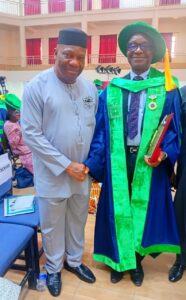
The convention also celebrated literary excellence with the investiture of seven new ANA Fellows. Among them was Dr. Martin Akpan, distinguished medical doctor, writer and former President of ANA, Akwa Ibom State Chapter, who made history as the first Akwa Ibom writer to receive the prestigious fellowship.
Other personalities honoured included Edwin Eriata, Joan Oji, Sumaila Isah, Emeka Ukwuaba, Matthew Odono and Charles Iornumbe. Special awards were also presented to Dr. Sam Omatseye, Dr. Wale Okediran and the Nigeria Copyright Commission.
But beyond the honours, speeches and intellectual exchanges, Senator Sampson left the gathering with a message that deserves to travel far beyond the convention hall:
A nation that silences its writers risks silencing its conscience. A government that listens to its writers invests in its future. And a democracy that protects its critics protects itself.
The executions of Vatsa and Saro-Wiwa, and the wartime death of Okigbo, remain painful chapters in Nigeria’s history. Yet their literary legacies refuse to disappear.
Indeed, the bodies may be buried, but the books remain open.
The voices may have been silenced, but the messages continue to speak.
And as Senator Sampson aptly observed, writers, in the real sense, do not die because their ideas live on.
For the writer’s greatest weapon is the pen, the writer’s greatest victory is truth, and the writer’s ultimate immortality is the enduring power of the written word.