By Solomon OKPO
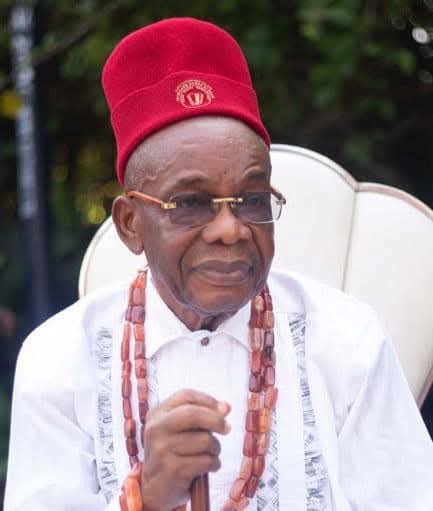
Former Minister of Lands, Housing and Urban Development and respected South-South political figure, Rt. Hon. (Chief) Nduese Essien, has offered a sweeping reflection on his decades-long journey through business, education, legislation and national leadership.
In an exclusive interview at his Eket residence, the 81-year-old elder statesman recounted the formative stages of his career, from selling advertising space at the Cross River State Newspaper Corporation to teaching at the College of Technology, Calabar, and later building a successful business in book distribution and publishing.
His transition to politics began in 1999 at the dawn of Nigeria’s Fourth Republic, when he was invited to contest the House of Representatives seat for Eket Federal Constituency. His maturity and experience, he said, gave him an edge as he quickly rose to chair the South-South Caucus and later the House Committee on Anti-Corruption, National Ethics and Values.
Key Legislative Battles: NDDC, 13% Derivation, Offshore/Onshore Dichotomy
Essien highlighted pivotal moments in Nigeria’s political evolution, particularly the push for resource control and equity for the Niger Delta.
He recalled mobilizing South-South lawmakers to secure the passage of the NDDC Bill, the removal of the offshore/onshore dichotomy and enforcement of the constitutionally approved 13% derivation for oil-producing states.
According to him, legislative visits to Niger Delta communities and a strained relationship between the National Assembly and the presidency of the time made it possible to override executive vetoes and push through critical bills.
He also traced the landmark breakthrough on derivation to the March 2000 meeting in Asaba, where South-South governors and lawmakers united to demand implementation. But he lamented that the regional cohesion that once defined the South-South “has weakened since 2003 and must be restored.”
Inside the Ministry: Bureaucratic Resistance and Anti-Corruption Reforms
As pioneer Minister of Lands, Housing and Urban Development under President Goodluck Jonathan, Essien said his biggest challenge was building the new ministry from scratch, often without access to essential records.
“Some staff hid the full list of federal lands and properties for six months,” he revealed.
His major reforms included:
Empowering state controllers to inspect projects instead of relying on Abuja officials.
Introducing seamless payments to contractors to curb extortion and file-chasing.
Clearing a massive backlog of certificates of occupancy to reduce corruption-prone delays.
Corruption “Back to Business as Usual” Since 2015
A former chair of the House Anti-Corruption Committee, Essien expressed worry over Nigeria’s stalled progress in the anti-graft fight.
He said the country made noticeable improvements between 2001 and the early Yar’Adua years, but added that “since 2015, corruption operates day and night across the country.”
According to him, systemic corruption remains a major factor behind Nigeria’s recurring insolvency despite high oil earnings and heavy borrowing.
On Governance Today: “Nigerians Are Hungry… Insecurity Is Worsening”
While declining to openly assess Akwa Ibom Governor Umo Eno or President Bola Ahmed Tinubu, Essien did not hide his concern about the national mood.
“Nigerians are hungry, the country is not moving forward, and insecurity is worsening,” he said, urging the federal government to urgently reset its priorities.
He traced the evolution of insecurity from Boko Haram’s early insurgency to today’s mix of banditry, kidnapping and criminal militias, some involving foreign fighters who entered Nigeria before the 2015 elections and never left.
To restore peace, he stressed, Nigeria must “differentiate between the types of insecurity and tackle each one strategically.”
On Controversial Ambassadorial Nominees:
Reacting to the recent ambassadorial list that included nominees reportedly facing EFCC investigations, Essien said the mix of qualified and unqualified individuals was “unfortunate.”
“When people who should never represent Nigeria are appointed because of connections, our foreign image suffers,” he warned.
A Life of Service Still in Progress:
Though reflective, Essien remains guarded on local political matters. He said he reserves his assessments and advice for his governor for private discussions, not public commentary.
As he approaches 82, the elder statesman says his journey has been one of continuous learning, shaped by business, public service and a lifelong commitment to the Niger Delta’s advancement.