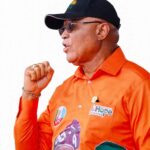
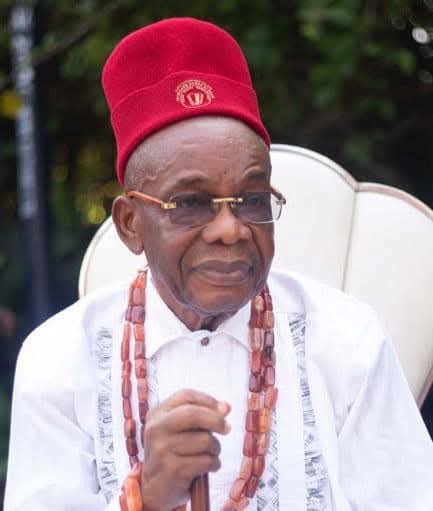
In this exclusive interview with Solomon OKPO, a distinguished elder statesman, former Minister of Lands, Housing and Urban Development, former political leader of the Eket Senatorial District, and one-time chairman of the South-South Caucus in the House of Representatives, Rt Hon (Chief) Nduese Essien, opens up about his remarkable journey through public life. Now 81 and approaching 82, he reflects on decades of service spanning business, education, legislation, and national leadership.
He revisits pivotal moments in Nigeria’s political evolution, including the struggle for the 13% derivation, the passage of the NDDC Bill, and the battle against the offshore/onshore dichotomy. He also speaks candidly about corruption, insecurity, governance, and the lessons today’s leaders must learn.
What follows is a deeply insightful conversation with a man who helped shape some of the most consequential policy shifts in Nigeria’s democratic era.
Q: At 81 going on 82, how do you reflect on your journey, from businessman to lawmaker, minister, and elder statesman?
A: Thank you very much for your question. It has been a broad and enriching journey. I began as a commercial officer at the Cross River State Newspaper Corporation, selling advertising space, a very difficult task at the time because it was a new concept. Convincing buyers and, even harder, collecting payments, taught me perseverance and persuasion.
I later moved into teaching at the College of Technology, Calabar, which was familiar territory. It was there that my desire to gain practical business experience grew, leading me into book distribution, publishing, and library development consultancy under the name Students Care Services Limited.
In 1999, at the dawn of civilian rule, I was invited by my elders to contest for the House of Representatives seat for Eket Federal Constituency. Despite the challenges, my age and experience gave me an advantage. I became chairman of the South-South Caucus in my first term and later chaired the House Committee on Anti-Corruption, National Ethics, and Values in my second term.
Eventually, I was appointed Minister of Lands, Housing and Urban Development under President Goodluck Jonathan. All these experiences shaped who I am today.
Q: You served in the House of Representatives from 1999 to 2007. What would you consider your most significant legislative achievements?
A: My most outstanding achievements include mobilizing the South-South Caucus to secure the passage of the bills establishing the NDDC, removing the offshore/onshore dichotomy, and compelling the president to pay the constitutionally provided 13% derivation to oil-producing states. As chairman of the Anti-Corruption Committee, we also initiated key amendments to strengthen anti-corruption laws.
Q: As the pioneer Minister of Lands, Housing and Urban Development, what challenges did you face in setting up the new ministry, and which accomplishments stand out?
A: The greatest challenge was gathering the materials and data needed to establish the ministry, especially separating it from the Ministry of Works. Some staff even hid important information, like the full list of federal lands and properties, which I didn’t see until six months into my tenure.
My key achievements include.
1. Centralizing project inspection and monitoring through state offices, empowering state controllers instead of relying on Abuja officials.
2. Introducing seamless payments to contractors to eliminate file-chasing, extortion, and corruption.
3. Clearing the backlog of certificates of occupancy, ensuring new ones were signed promptly to reduce delays that encouraged corrupt practices.
Q: You played a leading role in the battle against the offshore/onshore dichotomy. What were the turning points that secured victory for the Niger Delta?
A: Two things made the difference. First, members of the National Assembly visited Niger Delta communities and saw the conditions firsthand. On their return, they became prime supporters of the bills. Second, there was a frosty relationship between the National Assembly leadership and the president at the time, making it easier to override presidential vetoes with a two-thirds majority. Those conditions made success possible; today, it would have been much harder.
Q: How crucial was cooperation between South-South governors, lawmakers, and technocrats in winning the 13% derivation? Any lessons for today?
A: From May 1999, President Obasanjo refused to pay the 13% derivation despite constitutional backing. The breakthrough came in March 2000 when South-South lawmakers and governors met in Asaba. The communiqué from that meeting pressured the federal government to announce payment from January 2000, though we insisted it should start from May 1999.
Sadly, the unity and cohesion that defined the South-South then has weakened since 2003. I expected the region to have grown stronger, especially with the establishment of a commission to coordinate its joint economic programme. That has not happened, and it must be restored.
Q: As former chairman of the House Committee on Anti-Corruption, Ethics and Values, how do you assess Nigeria’s progress in fighting corruption?
A: Between 2001 and the short period under President Yar’Adua, Nigeria made significant progress. Our corruption perception ranking improved. But since 2015, it has largely been business as usual. Corruption operates day and night across the country. It is the bane of development and a major reason Nigeria has become insolvent at various points despite huge revenue from oil, loans, and other sources. It is unfortunate.
Q: What is your personal assessment of Governor Umo Eno as a leader, administrator, and person?
A: At my level, I do not assess my governor in the media. If he seeks my assessment, I will give it privately. It would be improper to publicly critique him as an elder statesman.
Q: Which issues should the Akwa Ibom State Government prioritize to deliver the true dividends of democracy?
A: I am in a position to advise my governor directly, but not through the press.
Q: What is your general assessment of the APC-led federal government under President Bola Ahmed Tinubu, especially with recent defections from the PDP to the APC?
A: The APC-led government has been in power for about 10 years. President Tinubu has served nearly 30 months of that. I will recuse myself from giving a full assessment in public, but I will say this: Nigerians are hungry, the country is not moving forward, and insecurity is worsening. The government must reassess its priorities urgently.
Q: With rising insecurity across states, what advice would you give the federal government on restoring peace?
A: Insecurity is now so widespread that the international community has categorized Nigeria as a country of particular concern. The crisis evolved from Boko Haram’s early years to a mix of insurgency, banditry, kidnapping, and religious extremism.
After 2015, many foreign insurgents who came to force out the Jonathan administration stayed behind. Some wanted to be paid to leave; others found Nigeria conducive for crime. They diversified into kidnapping, assassination, and other violent acts. Over time, these groups merged into various ideological or criminal networks.
Nigeria must differentiate between the different types of insecurity and tackle each one urgently and strategically if the nation is to return to normal.
Q: Recent ambassadorial nominations sparked controversy, with some nominees reportedly facing EFCC-related cases. What is your reaction?
A: The list contains a mixture of people, some eminently qualified, others who should never represent Nigeria, and some clearly rewarded due to connections. It is unfortunate. The result will be the continued protection of Nigeria’s bad image abroad, when ambassadors should be highly respected individuals. Where the selection process fails, our foreign image suffers.