

By Solomon OKPO
CLEEN Foundation has launched a three-day inception training and inaugurated State Multi-Stakeholder Implementation and Monitoring Committees (SMIMCs) as part of renewed efforts to strengthen the Women, Peace and Security (WPS) agenda across five states, Kaduna, Nasarawa, Imo, Plateau, and Benue.
The initiative, carried out in collaboration with state-level partners, aims to deepen the domestication and implementation of Nigeria’s National Action Plan (NAP) on WPS. It seeks to address the persistent gendered impacts of conflict, insecurity, and weak governance structures that continue to disproportionately affect women and girls, especially in the North-Central and South-East regions.
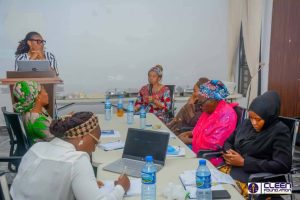
Speaking on day one of the training in Kaduna, CLEEN Foundation’s Executive Director, Peter Maduoma, represented by Programme Manager, Chigozirim Okoro, highlighted gaps in the execution of the WPS framework at the sub-national level. According to him, despite national commitments, implementation across states remains “weak, fragmented, and poorly coordinated.”
“Several states either lack functional State Action Plans or have inactive implementation structures, resulting in minimal progress on key WPS pillars, including participation, protection, prevention, relief and recovery,” he said.
The newly inaugurated SMIMCs are designed to serve as inclusive coordination platforms, bringing together government ministries, security agencies, civil society organisations, traditional and religious authorities, women mediators, youth groups, and the media. Their mandate includes planning, overseeing, and monitoring WPS interventions while ensuring alignment with national frameworks and adapting strategies to local contexts.
CLEEN Foundation noted that the committees will also track state-level commitments through the Security Accountability Project (SAP), foster institutional collaboration, and promote gender-sensitive decision-making within peace and security processes.

The ongoing inception workshops aim to build the technical capacity of committee members on WPS principles, monitoring methodologies, reporting systems, and coordination mechanisms. Participants will also develop state-specific implementation roadmaps to drive the operationalization of WPS commitments.
Each training session hosts at least 30 participants drawn from key ministries, gender committees of State Houses of Assembly, security agencies, including the Police, DSS, NSCDC, Correctional Service and the military as well as faith-based groups, traditional institutions, media representatives, WPS advocates, He4She ambassadors, and SIC networks.

The workshops were conducted in Imo, Nasarawa, and Benue States from November 11–13 and continue in Plateau and Kaduna States from November 18–20, 2025.
Across the five states, CLEEN Foundation expects stronger coordination, improved accountability, increased visibility for WPS commitments, and deeper involvement of women and youth in peace and security decision making. The project is supported by the Norwegian Embassy.