
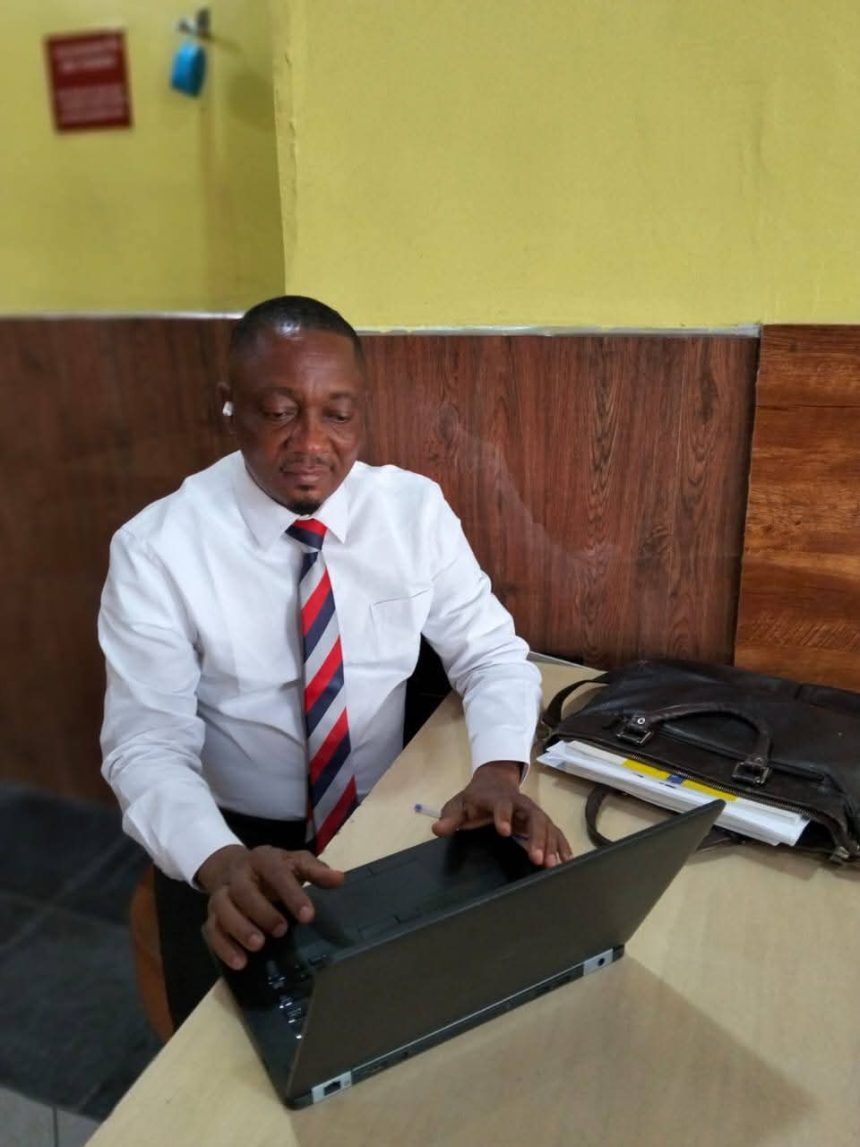
By Solomon OKPO
In an exclusive interview, Nigerian STEM advocate and founder of Talk and Do Physics, Timothy Otobong, has revealed an ambitious new chapter in his mission to make science practical, accessible, and globally competitive for young learners. What began as a simple classroom moment when a group of 50 students pleaded with him to extend their physics lesson has evolved into the Talk and Do Academy, an online STEM innovation hub now partnering with international space-education organisations.
Otobong said the turning point came when he realised he could “clutch the mindset that physics is not abstract” by connecting lessons to real-life scenarios. This vision soon expanded into the Talk and Do Academy, designed to prepare children for future careers in engineering, aerospace, robotics, and science, while integrating AI-driven learning. The academy delivers creative, interactive classes via Zoom for primary and secondary school students, covering STEM subjects, exam preparation (including WAEC, SAT and GCSE), and long-term certification programmes.
A major force behind the academy’s international outlook is its partnership with SWAPC, Space Workshop Assembly Project Challenge, a UK-based initiative founded by Jay Welsh. Through this collaboration, students can participate in a unique space-themed programme that enables them to play, learn, design, and launch space-related projects, giving them early exposure to aerospace concepts and potential global sponsorship pathways.
“Our partnership brings space for all nations,” Otobong said, emphasising that underserved schools and communities remain a priority. He explained that SWAPC, working through the academy, aims to empower children whose parents may lack educational or financial resources by offering access to space-related training and possible visa-supported opportunities in the future.

As he prepares to participate in the upcoming Space and Astronomy Conference in Karachi, Otobong says he is most excited to showcase how accessible space-education tools can ignite curiosity: “Astronomy and space inclusivity have inspired countless educators and learners worldwide.”
He shared multiple success stories driven by the academy’s hands-on approach students using STEM to address real-world challenges, from sustainable energy to digital innovation. Still, he acknowledged obstacles such as limited government support, funding gaps, and low awareness. International organisations like SWAPC and Astronomy for Equity, he said, have helped expand outreach, with SWAPC expected to extend its footprint to Canada, Jamaica and India.
Next year, Talk and Do Academy will officially launch Talk and Do SWAPC Initiatives in Nigeria, with expected endorsements from British multinational companies. Representatives from Kenya’s Centre for Astronomy, alongside partners from Canada and India, will participate in the Nigerian rollout. As the SWAPC country representative, Otobong plans to begin a nationwide awareness campaign focused on making space and aerospace education accessible to underserved communities.
The campaign will begin at the School of Health Technology, General Hospital Urua Akpan in Essien Udim Local Government Area.
Registration for upcoming STEM and space-training programmes is open at the academy’s website: www.talkdoacademy.com.
SPONSORED