By our correspondent
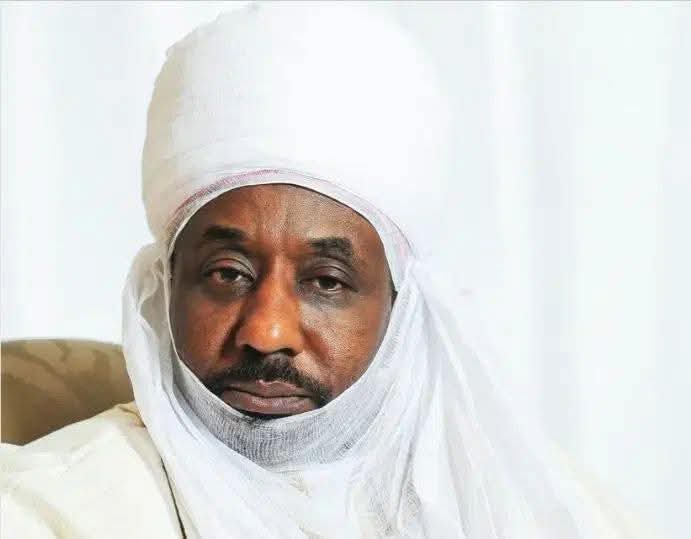
Abuja, The Emir of Kano and former Governor of the Central Bank of Nigeria (CBN), Muhammadu Sanusi II, has urged ministers and presidential aides to stop praising presidents blindly and instead offer honest advice that can help rescue the nation’s struggling economy.
Speaking on Monday in Abuja at the Oxford Global Think Tank Leadership Conference and Book Launch, Sanusi warned that Nigeria’s governance crisis is deepened by sycophancy and the culture of flattery that prevents leaders from hearing hard truths.
“Our leaders listen but only to those who tell them what they want to hear,” the Emir said. “Nigeria has too many sycophants in government. Those who speak the truth are seen as enemies of the state.”
Sanusi lamented that excessive praise during official meetings undermines accountability, saying such behavior “disgraces both the office and the person who holds it.”
“You sit in a meeting, and the President is there. The first thing people say is, ‘Mr. President, I want to thank you for your great leadership. God has blessed Nigeria by making you our leader.’ By the time they finish laying that foundation, it is their advice that the President accepts,” he said.
“But when you tell the truth and point out what is wrong, they say you are the enemy.”
He urged cabinet members and presidential advisers to restore integrity to public service by speaking truth to power, stressing that blind loyalty remains one of Nigeria’s biggest obstacles to progress.
Turning to the economy, Sanusi commended the Tinubu administration for removing fuel subsidy and unifying the exchange rate, describing both as “painful but necessary steps.” However, he cautioned that such reforms would fail if not supported by fiscal discipline and prudent management of savings.
“If you stop paying subsidies but continue borrowing more, it means you’ve filled one hole only to dig another,” he warned. “The real challenge now is the quality of government spending and the management of the revenues saved.”
The Emir, who served as CBN Governor from 2009 to 2014, said Nigeria’s current economic woes stem from years of policy inconsistency and populist politics. He recalled that those who resisted fuel subsidy removal in 2012 are now being forced by economic realities to do the same.
“In 2012, we warned that the subsidy was unsustainable, but politics took over,” he said. “Now the same people who led protests against it have inherited the problem and had no choice but to do the right thing.”
Sanusi commended Finance Minister Wale Edun and CBN Governor Yemi Cardoso for their professionalism and initial steps to stabilize inflation and exchange rates. But he insisted that reforms must be matched with a leaner government and reduced waste.
“Why do we need 48 ministers? Why do we need long convoys of vehicles and endless travel expenses?” he queried. “We cannot preach sacrifice to the people while living in luxury at the top.”
At the conference, themed “Reimagining Leadership and Governance in a Changing Africa,” development experts, policymakers, and academics discussed the need for institutional reforms and ethical leadership.
In his remarks, Atedo Peterside, founder of Stanbic IBTC Bank, echoed Sanusi’s call for transparency, warning that hardship will only yield results if government spending benefits ordinary citizens.
“It’s not true that pain automatically brings gain,” Peterside said. “Gain only follows pain if the government spends wisely, eliminates waste, and supports the poor.”
Both Sanusi and Peterside agreed that Nigeria’s recovery requires not just sound economic policies but moral courage and good governance.
“Good policy without good governance is like planting a tree and refusing to water it,” Sanusi concluded. “Nigeria’s leaders must stop surrounding themselves with praise singers and start listening to the truth, even when it is uncomfortable.”