
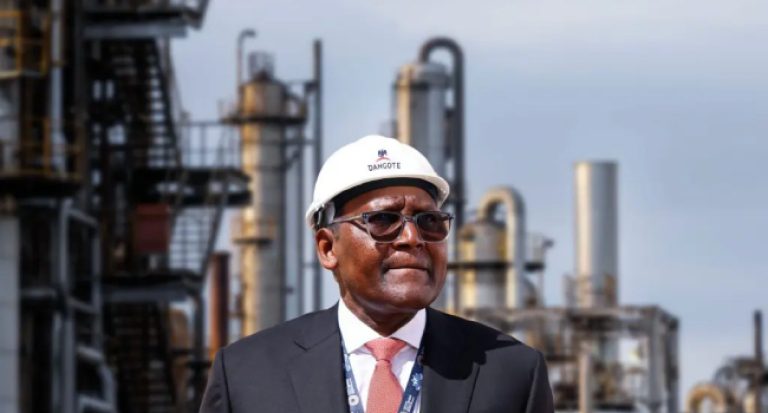
The Petroleum Products Retail Outlets Owners Association of Nigeria (PETROAN) has raised concerns over Dangote Refinery’s plan to distribute fuel directly across Nigeria. PETROAN President Billy-Gillis Harry warns that this move could lead to a market monopoly, job losses, and eventual price hikes, likening it to a “Greek gift.”
PETROAN fears Dangote’s direct distribution could mirror past dominance in sectors like cement, flour, and sugar. Smaller businesses might be pushed out, leading to job losses and potential prices soaring to N2,500 per litre. PETROAN calls for government regulations to prevent market domination and ensure fair competition.
Dangote Refinery defends its plan, stating it aims to improve fuel supply efficiency, reduce production costs through direct sales and better logistics, benefiting industries like manufacturing and telecommunications.
The refinery noted that businesses in these and other sectors can now buy fuel directly from its facility. The 650,000-barrel-per-day refinery came on stream in January 2024, first rolling out diesel and aviation fuel A1. PMS rollout followed nine months later, in September 2024. As of February this year, the refinery disclosed that it had reached 85 per cent of its installed capacity, expressing confidence in the speedy attainment of full capacity.
Meanwhile, the perception of Dangote Refinery as a monopoly has been attributed to the Federal Government’s failure to provide adequate crude oil supply to smaller refineries.
The Committee of Refineries Owners Association of Nigeria (CORAN) argued that the real threat to competition is not Dangote’s Refinery, but the Federal Government’s inaction and lack of support for modular refineries.
CORAN called for immediate government intervention to guarantee crude oil access for all refineries and ensure fair pricing and infrastructure sharing.
In an earlier interview, Billy-Gillis Harry expressed concern over Dangote Refinery’s proposed forward integration approach, where the company would not only produce but also distribute fuel.
He cautioned that this strategy could lead to monopolistic control within the downstream oil sector, harming smaller businesses and resulting in widespread job losses across the petroleum value chain.