
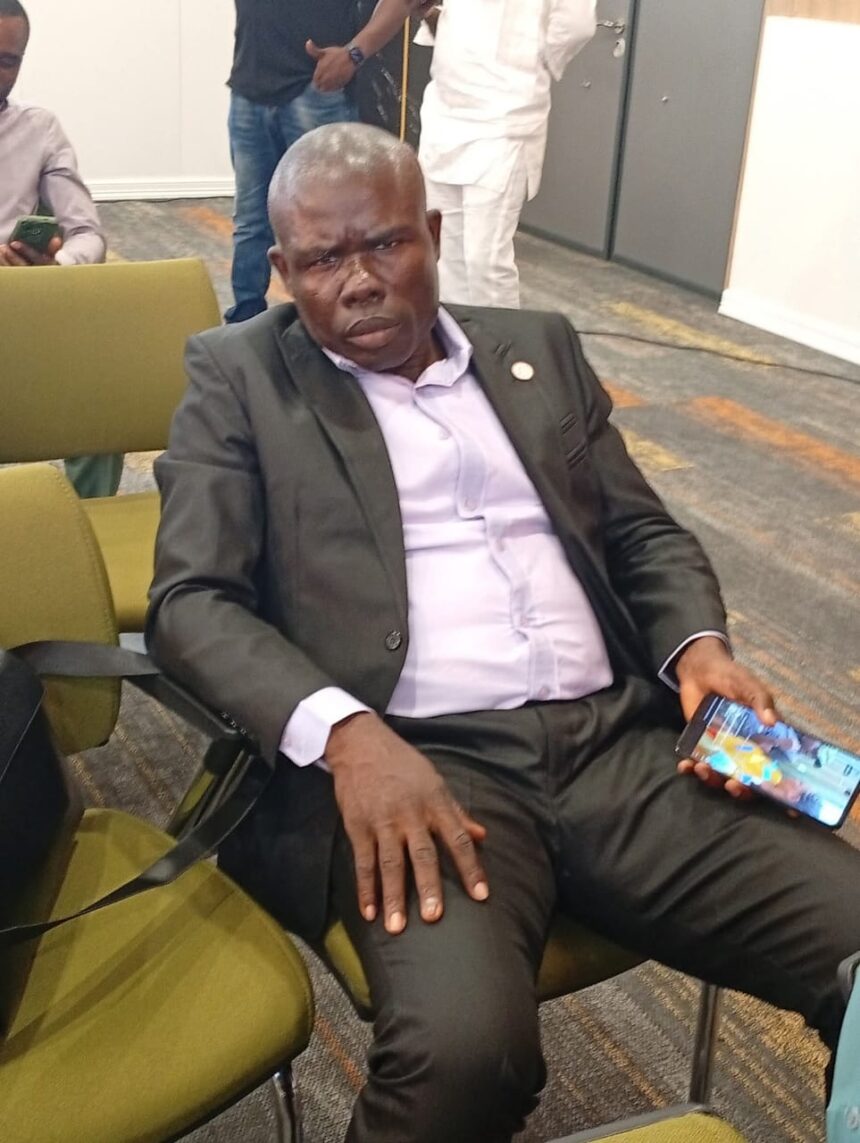
By Saviour Akpan, Esq.|The Evangelist news
ABUJA, In a democracy founded on the rule of law and equality, the right to justice and security should not be determined by the size of one’s wallet. Yet in Nigeria today, the commercialisation of justice and security services has become an alarming norm—where rights are priced, access is auctioned, and trust in public institutions is eroded.
The Nigerian Police Force, constitutionally mandated as the gatekeeper of justice and internal security, is increasingly being accused of transforming into a pay-to-play system. Despite legal frameworks that guarantee access to justice for all citizens, the reality in police stations and courtrooms across the country paints a disturbing picture.
A System for the Highest Bidder: From illegal fees for submitting petitions to the monetisation of bail—ranging anywhere between ₦10,000 to ₦500,000—the justice and security sectors have become marketplaces. Citizens report being asked to pay between ₦20,000 and ₦200,000 to have petitions accepted at various police commands, despite the Police Act and the 1999 Constitution explicitly outlawing such charges.
Even the act of reporting a crime or feeding a detained relative now carries a price. This entrenched extortion culture, often disguised as “station charges,” is a blatant abuse of citizens’ rights and an affront to Section 34(1)(a) of the Constitution, which upholds the dignity of the human person.
Roadblocks and checkpoints, once designed for public safety, have morphed into extortion points. Motorists are routinely harassed and forced to “settle” to pass, while armed police units are increasingly deployed for private business interests—turning public officers into the private security guards of wealthy individuals and corporations.
Welfare Woes: A Symptom, Not an Excuse
Observers point to poor welfare among officers low pay, inadequate housing, poor insurance, and delayed pensions—as the root cause of these troubling developments. While these challenges are undeniable, experts caution that hardship must never be used to justify corruption.
“No matter how poorly paid a judge is, they have no right to sell justice,” said Saviour Akpan, Executive Director of Community Policing Partners (COMPPART). “Likewise, a poorly equipped security officer cannot auction protection to the highest bidder.”

The Nigerian Constitution, particularly Section 14(2)(b), makes clear that “the security and welfare of the people shall be the primary purpose of government.” This includes not just the public at large, but also the men and women employed to serve.
The commercialisation of justice and security services has far-reaching consequences. It fosters inequality, limits access to justice to only those who can afford it, and undermines public trust in the very institutions meant to protect them.
More troubling still is the rise in human rights abuses, as officers resort to intimidation, unlawful detention, and torture in pursuit of illicit payments—directly violating the Anti-Torture Act, 2017, and constitutional safeguards.
The Way Forward: A Call for Urgent Reform
To reclaim the integrity of Nigeria’s justice and security sectors, urgent and far-reaching reforms are needed:
Periodic Welfare Reviews: Salaries, pensions, and insurance schemes for officers must be revised to reflect economic realities.
Stronger Oversight and Accountability: Independent bodies like the Police Service Commission, National Human Rights Commission, and Police Complaints Response Unit must be empowered and decentralised for grassroots access.
Criminalise Illegal Levies: Extortion practices such as petition fees and station charges should attract criminal penalties.
Independent Complaints Body: A civilian-led, independent oversight body for justice and security sector complaints is overdue.
Human Rights Education: Continuous training for security officers on constitutional limits and responsibilities is essential.
Community Policing: Community involvement in shaping security priorities must be institutionalised to build mutual trust.
Language Matters: Public officers should drop the term “members of the public” and adopt “fellow citizens” to reinforce civic unity and equal treatment under the law.
Nigeria cannot afford to normalise a system where justice and protection are privileges for the wealthy rather than rights for all. The survival of its democracy and the credibility of its institutions depend on restoring integrity, transparency, and accountability to the justice and security sectors.
“We must reject the idea that justice and security are commodities,” said Akpan. “We deserve institutions that serve the law—not ones that sell it.”
About the Author:
Saviour Akpan, Esq., is the Executive Director of Community Policing Partners (COMPPART Foundation for Justice and Peacebuilding), and a Steering Committee Member of the Partnership Against Violence Extremism (PAVE NETWORK). He is the immediate past National Chairman of the Network on Police Reform in Nigeria (NOPRIN).