
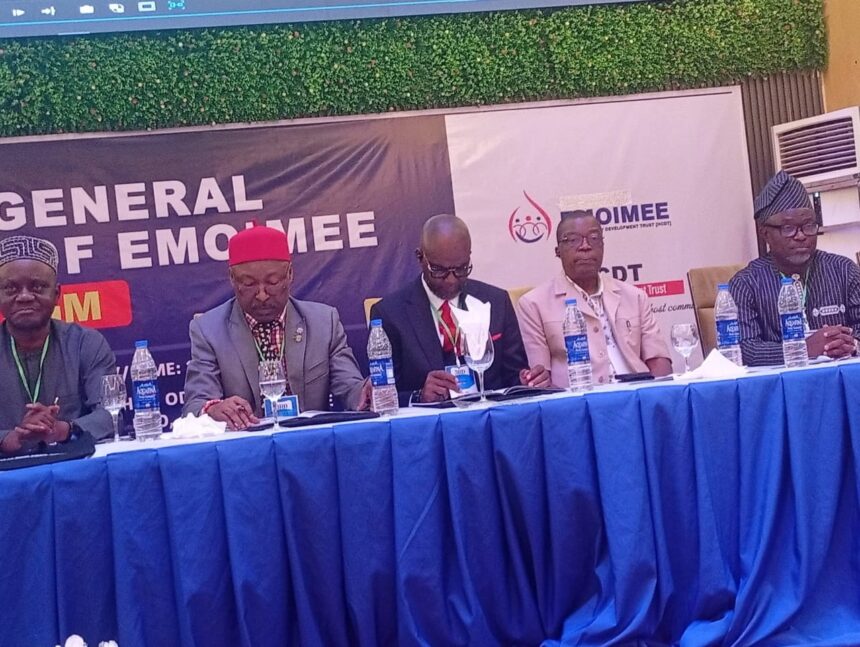
The third Annual General Meeting (AGM) of the NNPC/SEPNU EMOIMEE Host Communities Development Trust, held in Uyo on Thursday, October 29, 2026, provides an important opportunity to assess the journey so far, acknowledge achievements and, more importantly, confront the expectations of the communities the Trust was established to serve.
Three years into its existence, EMOIMEE deserves recognition for the interventions recorded across its seven host local government areas. From healthcare, education and community infrastructure to vocational training, digital skills acquisition, livelihood support and human capital development, the Trust has demonstrated that the Petroleum Industry Act (PIA) 2021 can serve as an effective instrument for grassroots development when properly implemented. The commissioning of teachers’ staff quarters at Kampa and a modern market building at Amadaka in Eastern Obolo are practical examples of interventions that respond to identifiable community needs.
However, commendations must not become a substitute for accountability, just as completed projects must not be mistaken for the total fulfilment of the Trust’s mandate.
The real measure of EMOIMEE’s success should not merely be the number of projects commissioned, speeches delivered or goodwill messages received at annual meetings. It should be the measurable improvement in the living conditions, economic opportunities and overall welfare of the people in its host communities.
The Evangelist believes that the third AGM has presented an opportunity for the Board of Trustees, management, the settlor, regulatory authorities and community stakeholders to move beyond celebrating achievements and embrace a more ambitious development agenda. The complaints, observations and recommendations raised by traditional rulers, civil society representatives, persons with disabilities and other stakeholders deserve serious consideration. They should not be treated as ceremonial contributions but as legitimate demands from the people whose resources and environment sustain the oil and gas industry.
One critical area requiring urgent attention is the equitable distribution of development projects. While the Board Chairman, Hon. Justus Ntuk, assured communities yet to benefit directly that they had not been forgotten, such assurances must translate into a transparent and verifiable development timetable. No host community should feel abandoned, marginalised or perpetually placed at the bottom of the priority list. The Community Development Plan must be periodically reviewed to accommodate emerging needs, population changes and the peculiar development challenges of individual communities.
We also consider youth empowerment a matter of urgency. As rightly observed by former Secretary to the State Government, Engr. Emmanuel Ekuwem, investment in youth mentorship is critical to the future of host communities. EMOIMEE must go beyond occasional skills acquisition programmes and develop a sustainable youth empowerment framework that connects training with employment, entrepreneurship financing, mentorship and market opportunities. The objective should be to produce economically independent young people rather than beneficiaries who depend indefinitely on periodic interventions.
Equally important is environmental protection. The concerns raised by stakeholders from Eastern Obolo over land reclamation, riverbank protection and ocean encroachment should attract immediate attention. Communities facing environmental threats cannot afford to wait indefinitely for development interventions that do not address the dangers confronting their homes, livelihoods and ancestral lands. The Trust should work with relevant government agencies, environmental experts and the settlor to develop practical responses to these challenges. Development without environmental security is incomplete development.
Furthermore, the inclusion of persons with disabilities must become a deliberate policy consideration in all EMOIMEE programmes. The appeal made by their representative, Mr. Innocent Ntia, should remind the leadership that development is not truly inclusive when a section of society is excluded from its benefits. Public infrastructure, educational opportunities, vocational programmes and empowerment initiatives must be accessible to everyone, irrespective of physical challenges.
The Evangelist also urges the Board and management to establish a stronger project-monitoring and sustainability mechanism. It is encouraging that SEPNU, through its Manager of Public Relations, Mr. Effiong Esewu, has expressed its commitment to supporting the Trust in developing a sustainability framework. This commitment must be translated into practical arrangements for maintaining completed facilities, providing necessary utilities, ensuring proper usage and preventing public infrastructure from deteriorating shortly after commissioning. A completed project that cannot be maintained is a wasted investment.
We commend the Nigerian Upstream Petroleum Regulatory Commission (NUPRC) for reaffirming its commitment to monitoring the Trust’s compliance with the statutory provisions of the Petroleum Industry Act. Nevertheless, regulatory oversight must be continuous, independent and result-oriented. Transparency in project selection, procurement, expenditure, implementation and evaluation should be strengthened. Communities must have access to information that enables them to understand how development funds are allocated and how projects are selected.
The settlor, Seplat Energy Producing Nigeria Unlimited (SEPNU), must equally recognise that its partnership with host communities should be built on mutual trust, consistent engagement and a genuine commitment to sustainable development. The improved relationship between the operator and host communities, as highlighted by Hon. Ntuk, is commendable. But such relationships must be sustained through responsiveness, fairness and respect for the legitimate concerns of the people.
The Evangelist recognises the contributions of the pioneer Chairman, Senator Helen Esuene, the current Board Chairman, Hon. Justus Ntuk, and other stakeholders who have helped establish the Trust and guide its activities through its formative years. Building a new development institution comes with challenges, but the next phase must be defined by stronger performance, measurable results and greater community participation.
OUR POSITION:
As EMOIMEE enters its fourth year, we call for a new development compact anchored on five priorities: equitable project distribution, meaningful youth empowerment, environmental protection, disability inclusion and transparent accountability. The Trust should also institutionalise regular community consultations and publish periodic performance reports showing projects completed, funds committed, beneficiaries reached and outstanding needs.
The Petroleum Industry Act was not designed to create another bureaucratic structure or provide opportunities for endless stakeholder meetings. Its provisions are intended to ensure that host communities benefit meaningfully from petroleum operations and participate in their own development.
Therefore, the success of EMOIMEE must ultimately be judged by the people in Eket, Esit Eket, Mbo, Onna, Ibeno, Mkpat Enin and Eastern Obolo.
At three, EMOIMEE has a foundation worth consolidating. But the expectations of its host communities are much greater than commendations and ceremonial project commissioning.
The time has come to move from project delivery to people transformation, from promises to measurable performance, and from occasional interventions to sustainable development.
That is the true test of EMOIMEE at three.
The Evangelist News