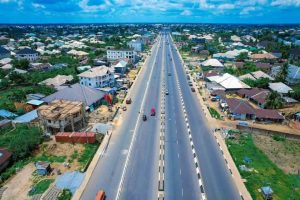
The Akwa Ibom State Government’s renewed commitment to road infrastructure under the ARISE 2.0 Agenda is a welcome development. The declaration that every Local Government Area will benefit from at least 10 kilometres of new roads is particularly significant because development cannot be meaningful when it is concentrated around Uyo and a few major urban centres while rural communities remain isolated by poor roads.
Roads are more than ribbons of asphalt. They are the arteries through which economic activities flow. A good road connects farmers to markets, children to schools, patients to hospitals, businesses to customers and communities to government. For Akwa Ibom, with its enormous agricultural, tourism, maritime and blue-economy potential, a dependable road network is indispensable to unlocking the full economic value of the state.
We therefore commend Governor Umo Eno’s administration for placing infrastructure high on its development agenda. The proposed 10-kilometre road target for each LGA, if properly implemented, could significantly reduce the infrastructure deficit in the hinterlands and open up communities that have remained economically disadvantaged because of poor accessibility.
However, The Evangelist believes that the real test should not be the number of kilometres constructed but the quality and lifespan of the roads delivered.
Akwa Ibom cannot afford a situation where roads are commissioned with fanfare only to develop serious defects shortly after completion. Every naira committed to infrastructure must produce enduring public value.
It is against this background that the reported strengthening of quality-control mechanisms by the Ministry of Works and Fire Services deserves attention. The involvement of project engineers, consultants and ministry engineers, alongside geotechnical testing and material sampling, is the right approach. The state’s peculiar soil conditions and heavy rainfall make proper foundation work, drainage and engineering supervision absolutely critical.
The Commissioner for Works and Fire Services, Prof. Eno Ibanga, is right to emphasise that the foundation of a road determines its durability. Asphalt cannot be used to conceal poor engineering. Where the sub-base and base courses are defective, no amount of political pressure for quick commissioning will make the road durable.
We also welcome the reported decision to terminate and re-award contracts where contractors fail to demonstrate the required capacity. Government contracts should never become entitlement schemes.
Whether a contractor is local or foreign should be secondary to competence, capacity, integrity and performance. A contractor who cannot deliver according to specification and within the agreed timeframe should not be protected at the expense of taxpayers.
The Oron axis deserves particular attention. The proposed completion of the approximately 13-kilometre Oron beach and terminal access road, alongside the planned intervention on the Okobo-Oron corridor, could become an important catalyst for economic activity in the area.
With Akwa Ibom increasingly looking towards its maritime and blue-economy potential, roads connecting coastal communities and strategic economic facilities must be regarded as economic infrastructure, not merely transportation projects.
But roads and drainage must be planned together. Akwa Ibom’s increasing rainfall and changing climatic conditions have demonstrated repeatedly that a road without adequate drainage is an unfinished project.
The reported challenges around Udo Street and Ekpri Nsukara Road are reminders that storm-water management must be integrated into urban planning from the beginning rather than treated as an emergency after flooding has occurred.
We are equally encouraged by the proposed long-term transformation of Uyo into a modern metropolitan city. The expansion of Brook Street, proposed flyovers, investigations around Barracks Road and the consideration of mass-transit solutions indicate that the government is beginning to think beyond ordinary road construction towards urban transportation planning.
But Uyo must not be allowed to grow without a master plan. Flyovers should not simply be erected at every congested junction. They must form part of a comprehensive traffic-management strategy that considers population growth, pedestrian movement, public transportation, parking, drainage, land use and future commercial expansion. If a monorail is eventually considered, it should be subjected to rigorous feasibility, financial and environmental studies before public resources are committed.
The issue of compensation must also be handled transparently. Road expansion inevitably affects property owners and institutions, but development should not become an excuse for arbitrary dispossession.
Proper valuation, adequate notice and prompt, fair compensation should be fundamental principles wherever right-of-way acquisition becomes necessary.
On potholes, the three-phase approach of immediate repairs, resurfacing and full reconstruction is sensible. But the government must resist the temptation of endless patching where a road has reached the point of structural failure.
A road that requires reconstruction should be reconstructed. Repeatedly spending money on temporary repairs may ultimately cost taxpayers more than doing the job properly once.
The Evangelist equally urges the government to publish clear project information. Citizens should know the location, length, contractor, contract value, commencement date, expected completion date and status of major road projects.
Such transparency will strengthen public confidence and make it easier for citizens, journalists and civil society organisations to monitor implementation.
The reported 44 inherited projects being pursued alongside 108 new projects also reflects a commendable principle of continuity. Government should not abandon useful projects simply because they were initiated by a previous administration.
What matters is whether the project serves the public interest, whether funds have been properly committed and whether completing it represents value for money.
Ultimately, ARISE 2.0 should be judged on what the roads look like five, ten and fifteen years after commissioning—not merely on the number of projects commissioned today. That is the standard by which infrastructure programmes become genuine development rather than political statistics.
The Evangelist therefore supports the administration’s ambitious road programme but calls for three things: quality without compromise, transparency without excuses and equitable distribution without political discrimination.
If every LGA genuinely receives quality roads, if Uyo’s expansion is properly planned, if the Oron corridor is opened to greater economic activity, if drainage is treated as an integral part of road construction, and if contractors and supervising professionals are held accountable for failure, Akwa Ibom will have achieved more than a road-building programme.
It will have built the physical foundation for a stronger economy.
That should be the ultimate destination of the state’s road revolution: not more roads for the sake of statistics, but better roads that open communities, create opportunities, support businesses and improve the quality of life of the people.
Solomon Okpo ©