
By Solomon OKPO
There is an African proverb that says when a finger points to the moon, the wise look at the moon while the foolish stare at the finger. That timeless wisdom perfectly captures the controversy surrounding the name of the Ibom Deep Seaport.
At a time when the world is discussing maritime trade, industrialisation, logistics, exports, employment and economic competitiveness, some have chosen to reduce one of the biggest development projects in Akwa Ibom’s history to an argument over its name.
The real question is straightforward: What matters more, the name of the seaport or the prosperity it promises?
Will an unemployed graduate reject a well-paying job because the port bears the name “Ibom” instead of “Ibaka”? Will entrepreneurs turn down lucrative contracts because of nomenclature? Will international investors commit billions of naira based on sentiment rather than economic viability?
The answer is self-evident.
Names have significance, but development has greater value.
Calling the facility the Ibom Deep Seaport does not erase the history, identity or cultural heritage of Ibaka. The host community remains the host community. Its geographical location has not changed, nor have its rightful expectations to benefit from the project.
What has changed is the scope of the vision.
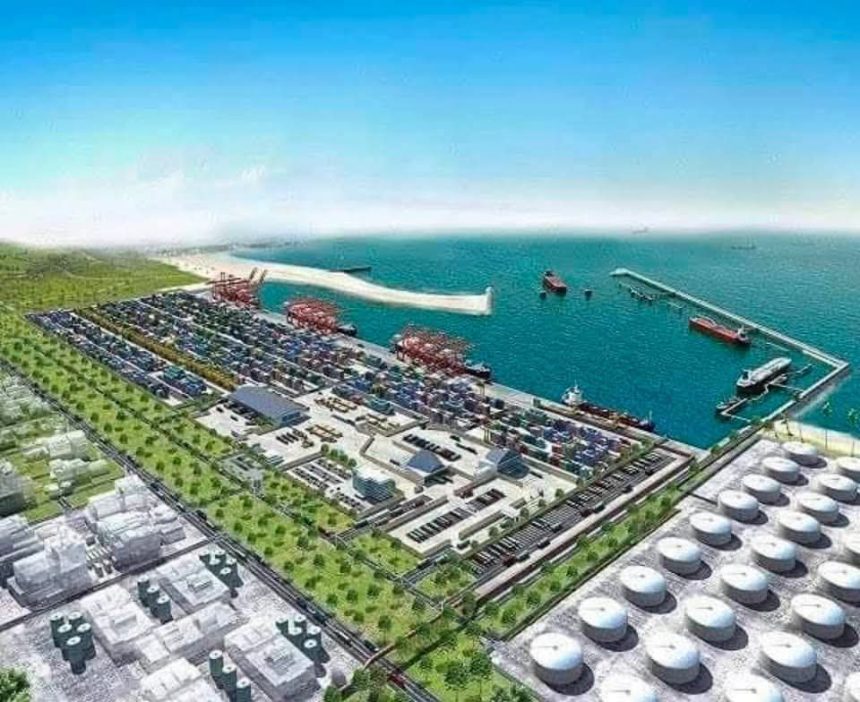
The seaport has evolved from being a local maritime facility into a strategic economic gateway intended to serve the entire state and beyond. It is therefore logical that it carries the identity of Akwa Ibom as a whole.
“Ibom” is more than a name. It is the collective identity under which Akwa Ibom people have built institutions, competed nationally and projected themselves globally for nearly four decades. It belongs to every citizen, regardless of ethnicity, clan or local government area.
No one questions why Ibom Air bears the state’s identity, even though its aircraft fly across Nigeria and beyond. Nobody argues that Ibom Plaza should have been named after the street where it stands. Neither has anyone insisted that Ibom Specialist Hospital should carry only the name of its immediate host community.
These are state-owned institutions. The Ibom Deep Seaport is no different.
Sadly, those who stand to gain the most from the project are being encouraged to focus on what is written on the signboard rather than what the project can deliver to generations yet unborn.
History offers valuable lessons. Great ports are remembered not because of debates over their names but because they transformed economies. They created industries, generated employment, attracted investment and connected regions to global markets.
That is where public attention should be directed.
The pressing issues should be how host communities can secure greater employment opportunities, improve infrastructure, expand educational access, stimulate local enterprise and prepare young people to participate meaningfully in a modern maritime economy.
Those conversations create prosperity.
A seaport is not merely a landmark; it is an economic engine. Ships do not sail toward emotion. They sail toward efficiency. Investors do not invest in sentiment. They invest in opportunity. Prosperity is built on sound planning, strategic execution and a shared commitment to progress.
The Oro Nation has a rich and enviable history of commerce, navigation and international trade. Its forebears understood the value of enterprise long before many modern economic theories were formulated. It would be unfortunate if that proud commercial heritage were overshadowed by a debate that contributes little to the larger economic future now within reach.
Ultimately, history will not ask what the port was called.
It will ask how many jobs it created.
It will ask how many businesses it attracted.
It will ask how much wealth it generated.
Most importantly, it will ask whether Akwa Ibom chose unity over division and progress over sentiment.
The answer should leave no room for doubt.
The name is Ibom Deep Seaport. The opportunities belong to the host communities. The prosperity belongs to all Akwa Ibom people