By Solomon OKPO
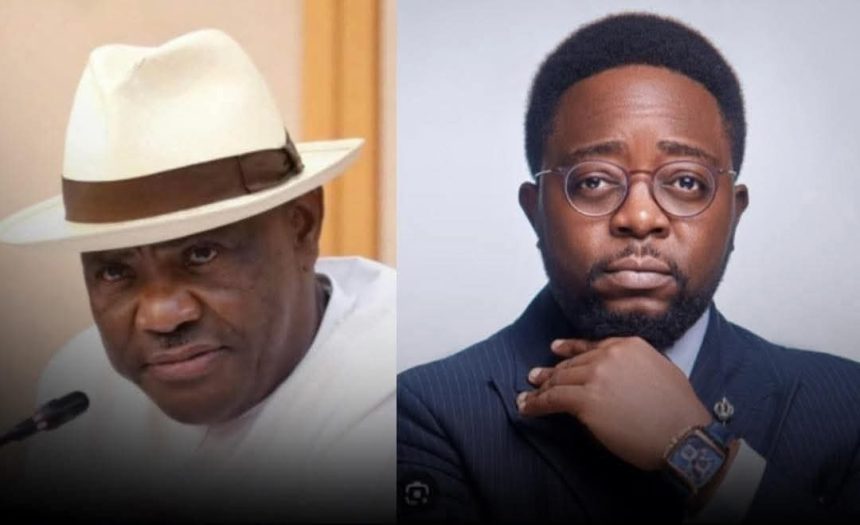
The Minister of the Federal Capital Territory, Nyesom Wike, has stirred controversy following a strongly worded reaction to comments made by Seun Okinbaloye during a live television programme, raising fresh concerns about the relationship between public officials and the media.
Speaking during a media chat in Abuja on Friday, Wike expressed deep frustration over remarks credited to Okinbaloye on Politics Today, a flagship programme on Channels Television.
The Minister said he was so angered by the journalist’s position that he “wished he could shoot him through the TV screen,” though he later clarified the statement was not a literal threat but an expression of irritation.
The controversy originated from Thursday’s broadcast of the programme, which examined the leadership crisis within the African Democratic Congress (ADC) and the role of the Independent National Electoral Commission (INEC). During the discussion, Okinbaloye voiced concerns about the implications of a weakened opposition, warning that Nigeria risked drifting toward a one-party state if viable alternatives fail to participate in future elections.
“I’m particularly very pained because what makes the race interesting is when it’s competitive, not when only one party stands in the middle of the ballot,” Okinbaloye had said, noting that the ADC’s internal crisis could undermine democratic competition ahead of the 2027 elections.
Reacting, Wike accused the journalist of abandoning professional neutrality by expressing personal views on a sensitive political matter. According to him, the role of an interviewer is to ask questions, not to advance opinions that could be interpreted as partisan.
The Minister’s remarks have since ignited public discourse, with analysts divided over whether Okinbaloye’s comments constituted legitimate journalistic concern or a breach of objectivity. Others have focused on the tone of Wike’s response, arguing that such language from a public official could be perceived as hostile toward press freedom.
The development underscores ongoing tensions within Nigeria’s political landscape, particularly as debates intensify over the strength of opposition parties and the health of the country’s multi-party democracy.