
By Solomon OKPO
There is a new civic riddle in Akwa Ibom: when land is needed for oil, gas, or mining, it magically belongs to government; when land must be rescued from decay, rodents, and reptiles, it suddenly belongs to “the people” specifically, the people who should kindly go to court while government watches from the sidelines with folded arms.
Take Stubbs Creek forest reserve. For extractive interests, ownership is crystal clear. The land is government land, firm and unquestionable, ready for allocation in the name of development. But stroll down to Qua River Hotel land in Eket once the crown jewel of the area and clarity evaporates. The same government that sold it off at a giveaway price now develops sudden amnesia. Retrieval?.
Impossible. Initiative? Unthinkable. Responsibility? Redirected neatly to Ekid people, who are advised to litigate their way to progress.
This is where the accusation enters the stage: Ekid people shun development. A serious charge, delivered with straight faces, despite overwhelming evidence to the contrary.
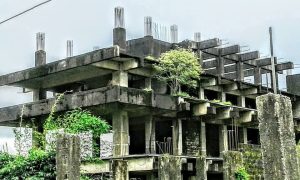
The land was sold by government. The land was abandoned by the buyer. The land has become a wildlife sanctuary without a budget line. Yet the people are blamed for not developing what they do not own and cannot access.
Logic, apparently, is a seasonal crop.
Even more curious is the government’s tourism sermon. We are told about hospitality, recreation, leisure, and economic diversification.
Meanwhile, the most strategic beachfront property in Eket sleeps under weeds and memories. Suggestions abound: buy it back, redevelop it as a waterfront resort, or repurpose it into a College of Aviation, Tourism, Sports, and Hospitality. The airstrip is nearby. The stadium is nearby.
Hotels are nearby including one owned by the governor himself. But no, starting afresh on virgin land sounds more “visionary” than fixing a glaring symbol of policy failure.
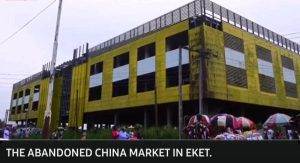
Then there is Urua Nka the Chinese Yiwu shopping mall, abandoned since COVID-19. No land dispute. No community resistance. Jointly funded by the state and private sector. Nigerians paid their counterpart funds. Billions now sit idle, aging faster than the concrete. The obvious question has the state fulfilled its own obligations? floats unanswered in the air, like an inconvenient mosquito in a boardroom.
Yet, in official storytelling, Ekid people are the villains: anti-development, obstructionist, unreasonable. Apparently, asking for fairness, compensation, and consistency is now classified as sabotage.
So here we are: a government that can swiftly appropriate land for profit-driven ventures but develops cold feet when it comes to correcting its own bad deals; a government that preaches tourism while ignoring prime assets; a government that blames citizens for projects it abandoned or never completed.
If this is development, then Ekid people are right to be cautious. After all, who wants development that only develops excuses?
*Narrative: Herbert Batta | The Evangelist News