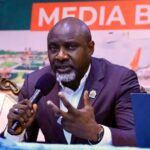

By Solomon OKPO
Former NDDC Managing Director and one-time Deputy Governor of Akwa Ibom State, Obong Nsima Ekere, has thrown his weight behind President Bola Ahmed Tinubu’s reform agenda, calling for greater national patience and a radical overhaul of Nigeria’s ailing power sector.
Speaking as a guest on Channels Television’s Inside Sources on Friday, Ekere said the Tinubu administration has demonstrated boldness with its policy direction, urging Nigerians to give ongoing reforms the time needed to yield long-term benefits.
“President Tinubu has the nation’s best interest at heart,” he stated. “Nigeria is a work in progress. We are not yet where we ought to be as a country, considering how long we’ve been independent. But there has been movement in the right direction, particularly in the past two years.”
Highlighting key fiscal reforms and the removal of petrol subsidies, Ekere argued that economic data shows measurable progress, even if the impact has yet to be felt at the grassroots.
“The truth of the matter is that the data is telling us a lot of progress is being made,” he noted. “I know it’s yet to translate to better living conditions for Nigerians, but it is a work in progress. Hopefully, in the next couple of years, Nigerians would be out of the woods.”
However, Ekere, who also previously chaired the Ibom Power Company, stressed that genuine progress depends heavily on resolving Nigeria’s chronic electricity crisis.
“A country of over 250 million people generating only 4,500 megawatts of electricity is totally unacceptable,” he declared. “President Tinubu has the courage and experience to confront this. But we must treat it as a national emergency.”
He called for a state of emergency to be declared in the power sector, enabling the presidency to bypass entrenched bureaucracies and act decisively.
Ekere was unsparing in his critique of electricity distribution companies (DISCOs), accusing them of inefficiency and a lack of sincerity.
He proposed that the federal government temporarily reclaim control of the DISCOs, inject fresh capital, and upgrade infrastructure before undertaking a more effective round of privatization.
“The power sector can be a major catalyst for economic growth,” he said. “But we must be bold and innovative in how we address its failures.”