By Solomon OKPO, Uyo.
The Energy and Maritime Reporters of Nigeria (EMR), Akwa Ibom State Chapter, has called on the Federal Government and relevant regulatory agencies to urgently review policies affecting indigenous marine and offshore service companies, warning that many local operators are facing severe operational challenges despite Nigeria’s local content framework.
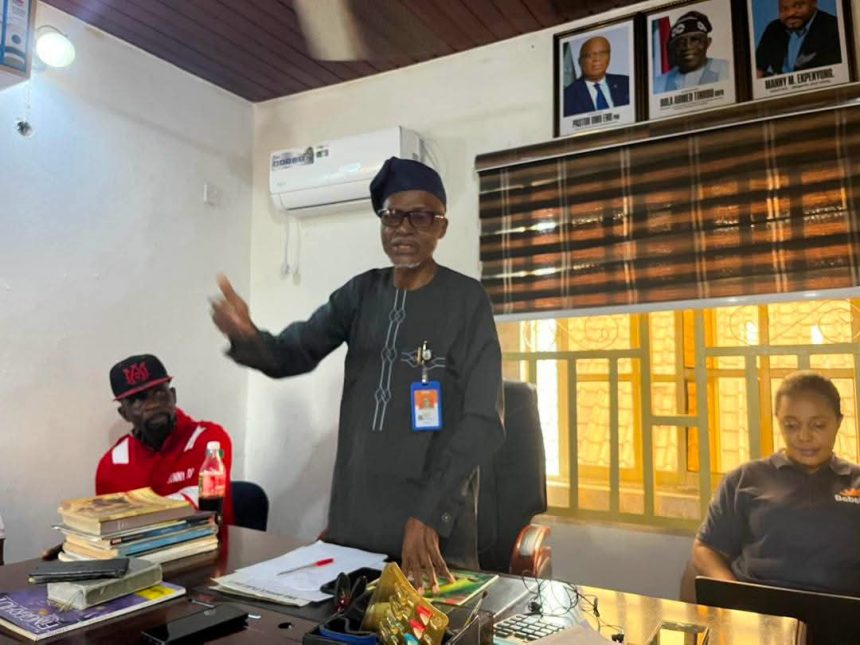
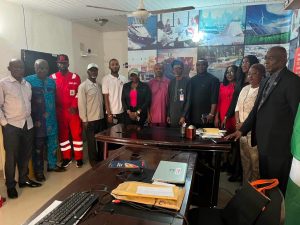
The call was made during a courtesy visit by the Executive Committee of the association to the management of BOBELS International & Associates Company Limited, an indigenous marine services company operating in the offshore support sector. EMR said strengthening indigenous participation in the marine and blue economy remains critical to achieving sustainable economic growth and creating employment opportunities for Nigerians.
Speaking during the visit, the Executive Director (Projects) of BOBELS International & Associates Company Limited, Mr. Eyo Sunday Ikot, lamented that existing policies have failed to provide adequate protection for indigenous operators, leaving them unable to compete effectively with foreign companies that dominate offshore contracts.
He noted that despite significant investments in the sector over the years, local firms continue to grapple with harsh regulatory requirements and mounting financial obligations.
Ikot disclosed that indigenous companies are required to renew several operational licences annually at costs exceeding ₦20 million, in addition to paying various taxes and statutory charges without corresponding access to business opportunities.
He observed that the earlier arrangement that encouraged technical partnerships between indigenous and foreign firms has become ineffective, thereby limiting the participation of local operators in offshore activities.
He urged the Federal Government to introduce practical intervention measures, including financial support and compensation mechanisms, to enable indigenous marine companies remain competitive and contribute meaningfully to national economic development.
According to him, continued reliance on foreign operators has encouraged capital flight, while indigenous companies have continued to generate local employment, retain investments within Nigeria and support host communities.
The BOBELS executive further revealed that the company has remained active in the marine industry for over 14 years despite numerous operational challenges and has established partnerships with American marine firms interested in investing in Nigeria’s shipbuilding industry.
He, however, regretted that previous attempts to attract foreign investors to establish vessel-building facilities in the country were frustrated by bureaucratic bottlenecks and inadequate government support.
Ikot expressed optimism that the establishment of the Federal Ministry of Marine and Blue Economy provides a fresh opportunity for government to address longstanding challenges confronting indigenous operators and unlock the vast economic potential of Nigeria’s maritime sector.
Earlier, the Chairman of EMR, Akwa Ibom State Chapter, Mr. Harrison Ndifreke, explained that the visit formed part of the association’s stakeholder engagement with key players in the energy, maritime, oil and gas and blue economy sectors.
He reiterated EMR’s commitment to promoting responsible journalism, supporting local content development, encouraging investment and drawing public attention to issues affecting the growth of Nigeria’s maritime industry.
Ndifreke stressed that with emerging opportunities in the blue economy and major offshore projects expected in Akwa Ibom State, indigenous companies deserve stronger institutional support to build capacity, create jobs and contribute significantly to national development.
He assured stakeholders that EMR would continue to provide a credible platform for constructive dialogue among government, regulators, investors and indigenous operators in pursuit of a sustainable, competitive and inclusive maritime economy.